



Beyond the Laptop: Rockwell Collins' iForce Communications System
The iForce is more than an in-car computer. It's essentially a computer-based communication system. It helps officers communicate with each other, communicate with any applicable databases, and even communicate with their vehicles.

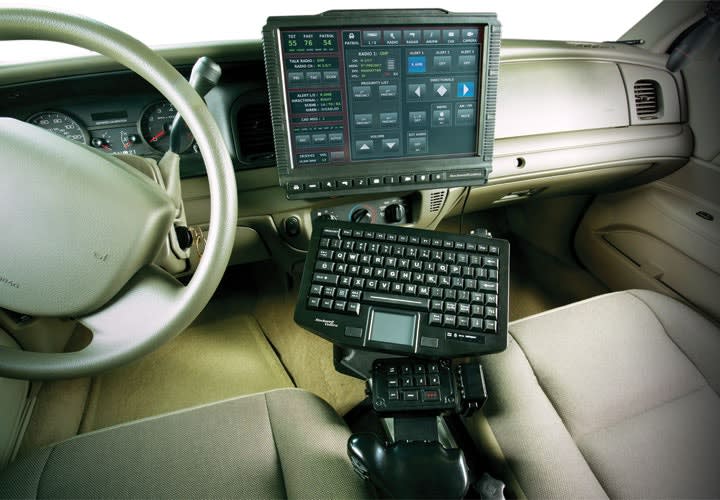
Photo: Rockwell Collins.
Back in 2008, the California Highway Patrol sent out a request for companies to come and pitch their latest in-car computer systems. That request attracted an unusual player, defense contractor Rockwell Collins. The company, better known for making aerospace and ground combat systems, was in the process of adapting its M7000 combat vehicle computer for public safety.
The Rockwell Collins system was unlike anything that the CHP evaluators had ever seen. And they really didn't know how to react.
"They had not envisioned a solution like what we offered them because nothing like it existed in this market at the time," says Preston Johnson, Rockwell Collins' manager of strategy and marketing for public safety business. "Based on what we showed them, they realized a much more integrated vehicle electronics system was possible. Out of that came what we now call the iForce Integrated Public Safety Vehicle Solution."
The iForce is more than an in-car computer. It's essentially a computer-based communication system. It helps officers communicate with each other, communicate with any applicable databases, and even communicate with their vehicles.
One major feature that attracted the CHP to the iForce system is its ability to help officers from different agencies communicate more easily. "We can crossband between any of the radios installed in the car," Johnson says.
"Imagine that you are a CHP officer and you roll up on a wreck in Anaheim. Because this is the area where you work, you have a radio from the Anaheim PD installed in your car. So an officer from Anaheim rolls up. And another CHP officer rolls up from somewhere else in a car that doesn't have an Anaheim radio. On your screen you can pick the Anaheim radio and the CHP radio, press one button, and now those two can talk to each other," Johnson explains. Repeaters can be added into the iForce system so that officers can even use its communications capabilities outside of their cars via handheld radios.
The iForce also performs all of the functions of a standard in-car computer such as supplying officers in the field with critical information. Johnson says he is currently working with a Texas agency that uses 12 different databases and
iForce has the potential to automate access to all of them.
Finally, iForce replaces many of the control units commonly found in patrol cars. Officers can give commands to control their lights, sirens, and other equipment either by voice, touch screen, or with a hand control device. The result is a less crowded workspace for the average officer.
"The iForce system removes all of the control interfaces you normally see in the front of the car," Johnson says. "The actual radios get moved into the trunk. That frees up space in the front of the vehicle."
Unlike most public safety in-vehicle computer systems, the iForce is not run solely by Windows software. The system controls all of the mission critical functions such as lights, sirens, and radios on a military grade Linux-based computer. The computer operates on proprietary software written by Rockwell Collins.
"We don't design things and base them around a Windows OS so that when you get the 'blue screen of death' everything fails," Johnson says. "We are used to designing systems where failure is not an option."
Although Windows is not the primary operating system for the iForce, it features a Windows module that allows agencies to run Windows-based CAD and report writing programs. "You haven't lost anything by replacing your laptop with the iForce system," says Johnson, who serves as a reserve officer with an Iowa Police Department. "It's just that the iForce computer is inherently much more capable and rugged than a laptop."
Rockwell-Collins' iForce system is currently on duty with the CHP and the Royal Canadian Mounted Police.
Related:
Rockwell Collins' iForce System Increases Situational Awareness for Officers
California Governor Curtails CHP's Purchase of New Patrol Vehicles
More Technology
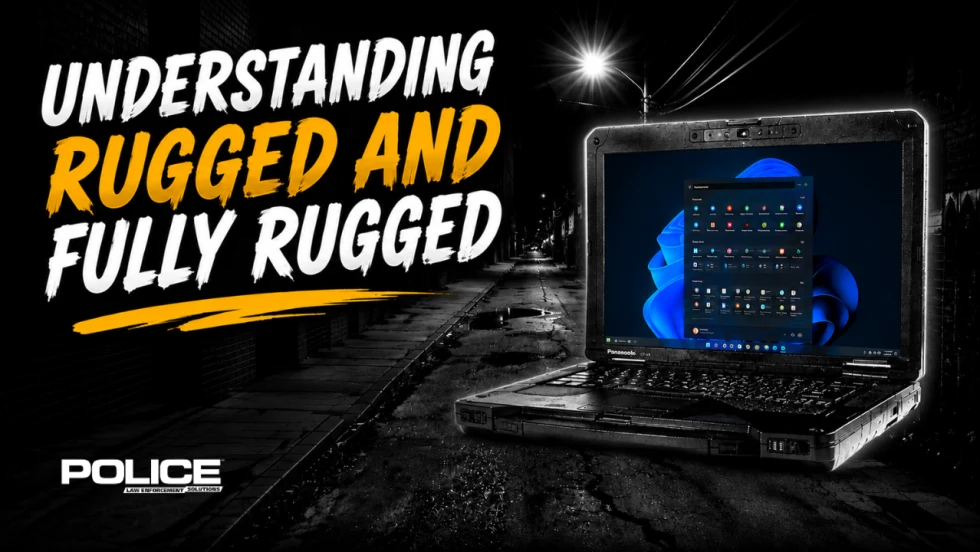
What Qualifies a Laptop as Rugged or Fully Rugged?
Police officers face a wide range of working conditions that can damage or even destroy a regular consumer laptop. Learn what qualifies a computer as rugged or fully rugged and why those devices are vital for law enforcement.
Read More →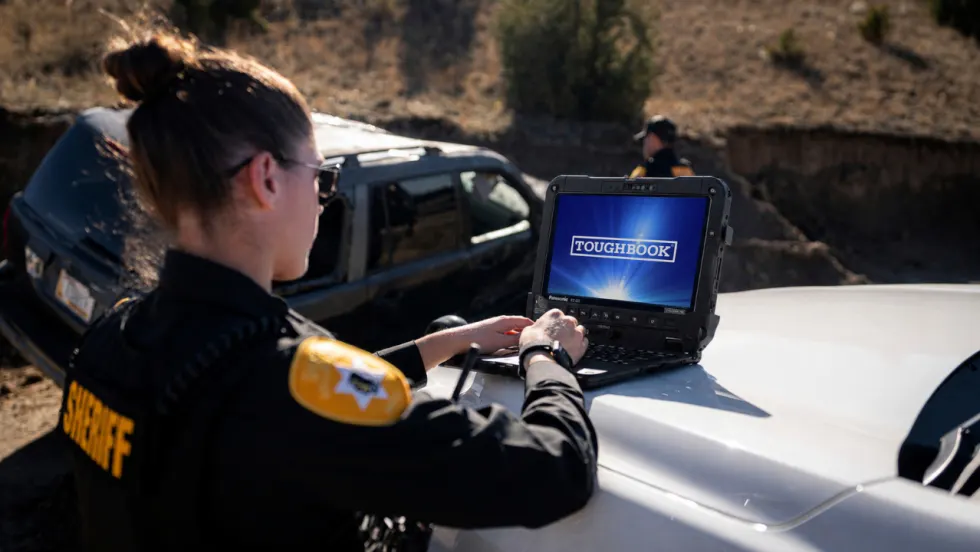
Panasonic Connect Launches the Toughbook 34 and Toughbook G3, Fully Rugged 2-in-1 Mobile Computers
Panasonic Connect has launched the Toughbook 34 and Toughbook G3 to facilitate in-vehicle dispatch, records management, and mobile command operations from any location.
Read More →
A police agency's guide to data-driven fleet management
Costs are rising and the public expects more transparency into how their tax dollars are spent. This e-book shows how police agencies can use fleet data to take control of fleet expenses while improving officer safety and demonstrating fiscal responsibility to the communities they serve.
Read More →
AI and analytics for law enforcement: Turning data into insights
Law enforcement agencies are managing more video, sensor data and digital evidence than ever before. Discover how AI and analytics can help turn that data into actionable insights that strengthen situational awareness, accelerate investigations and support more informed decisions.
Read More →
Vasco Electronics Adds Automatic Language Detection to Vasco Translator Q1
Vasco Electronics’ software update introduces hands-free language switching and expanded offline translation across 45 language pairs, empowering law enforcement, healthcare, and front-office enterprise teams
Read More →
North Miami Police Department Deploys Mark43
The North Miami Police Department has deployed Mark43 as part of its Five-Year Strategic Plan that represents its collective vision and goals for a more proactive police department, anchored by a core commitment to leveraging modern technology to enhance efficiency and public safety.
Read More →
Cellebrite Genesis for Enterprise Now Generally Available
Made available to the public sector in June, Cellebrite Genesis is serving a growing mix of national, regional, and local agencies worldwide, including some of the largest regional and metropolitan police departments. It is now available for enterprise organizations.
Read More →
2026 Vision FirstNet Users Summit to Host Emerging Leaders Training on Grassroots Advocacy for Public Safety
“Emerging Leaders Training: Understanding the Importance of Grassroots Advocacy for Public Safety," a session during the 2026 Vision FirstNet Users Summit, will offer a roadmap for unified advocacy at the federal level.
Read More →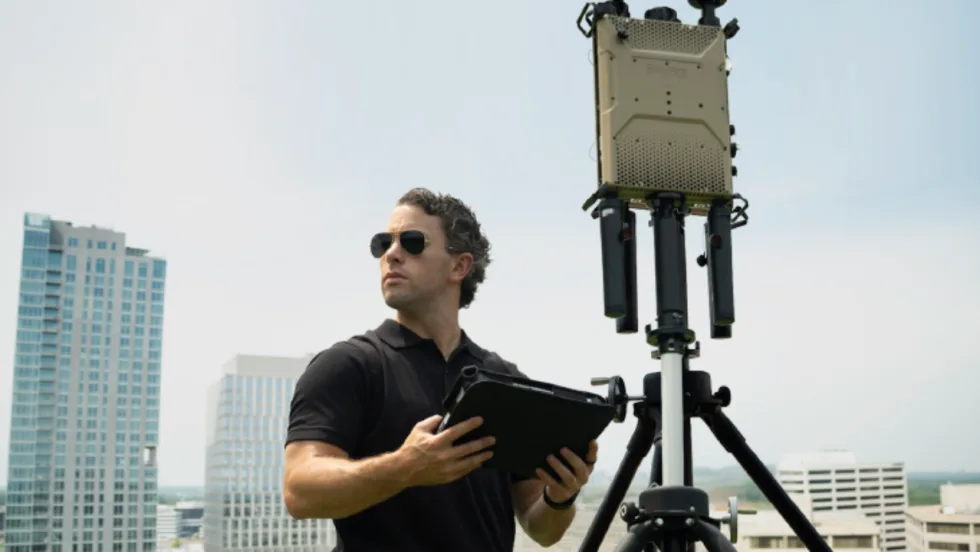
Motorola Solutions Completes Acquisition of D-Fend Solutions
Motorola Solutions has acquired D-Fend Solutions, an industry leader in counter-drone technology. This deal provides public safety and enterprise customers with access to advanced counter-unmanned aerial systems.
Read More →
ZeroEyes, Advantech & Camden Police Partner to Bring AI Gun Detection Technology to Delaware School District
ZeroEyes has partnered with Advantech and the Camden Police Department to deploy ZeroEyes’ AI gun detection and intelligent situational awareness platform at Delaware’s Caesar Rodney School District (CRSD).
Read More →