



Motorola's Public Safety Play: Broadband Networks
Motorola Solutions and Verizon are working closely with public safety agencies in Northern California's Bay Area and Harris County, Texas, to build and operate what will likely be the nation's first public safety broadband network on the LTE (Long Term Evolution) platform.

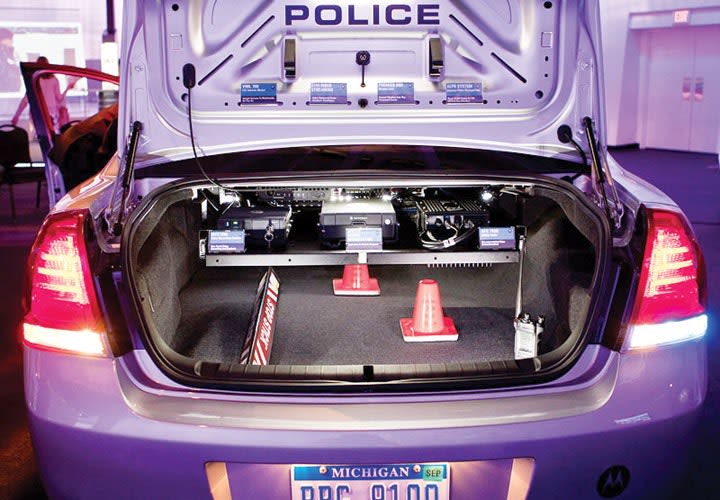
A terrorist attack, active shooter situation, or natural disaster can bring out the best in police first responders. It can also expose the flaws of a patchwork radio system that often thwarts communications among police, fire, and EMS.
To bridge these gaps, Motorola Solutions and Verizon are working closely with public safety agencies in Northern California's Bay Area and Harris County, Texas, to build and operate what will likely be the nation's first public safety broadband network on the LTE (Long Term Evolution) platform.
When it's fully operational, the Bay Area Wireless Enhanced Broadband System (BayWEB) should provide interoperable communications and higher-speed data transfer to better link agencies serving the area's 10 counties of 7 million people. A similar network would cover Harris County's nearly 4 million residents.
The networks will arrive as public-private partnerships. Motorola Solutions, the publicly traded entity that separated from Motorola's mobile-phone business in January, is positioning itself as a leader in public safety broadband infrastructure build-outs. The company has invested $22 million in the Bay Area network, matching a $50 million federal stimulus (ARRA) grant.
"The police have been waiting for broadband to arrive," says Rick Keith, Motorola Solutions' senior director of private broadband. "Now they're saying the teenager downloading her latest Fergie album has greater throughput than an officer."
The private network, which will be built over 13 years, will utilize 193 upgraded public safety towers and antennas to enable field officers, dispatch centers, and commanders to move on-scene video to a cruiser's dashboard screen, dispatch center's monitor, or watch commander's desk computer.
Officers could tap into surveillance cameras from their cruisers. Deputies sending fingerprint-image files from handheld readers could get faster matches from criminal databases. And audio data from gun-shot detection systems could be quickly triangulated via GPS to bring the closest patrol unit.
The system would initially speed up data transfer and later add mission-critical voice communication, allowing first responders to communicate radio-to-radio regardless of which agency they serve. The network operates on 700MHz channels now available, and could be modified if additional D-block spectrum arrives. At press time, federal officials continue to debate whether to auction the additional spectrum or allocate it to public safety.
"Whatever happens in D.C., if we get the extra spectrum, we're building a system that will add that rather than replacing the entire system," says Alameda County Sheriff's Dep. David Kozicki, who is overseeing the project. "In order for us to have full functionality, we need spectrum."
To manage the network, the Bay Area public safety agencies formed a joint-powers authority that would negotiate an operational agreement with Motorola called a BOOM (Build, Own, Operate, and Maintain) agreement. The company would build and operate the network and likely charge the agencies a recurring rate for use. Eventually, the network would be handed over to the authority.
Motorola Solutions is also developing devices for the network, such as a rugged handset with a smartphone form factor, vehicle modems, a USB dongle that plugs into a laptop, and a handheld license plate reader. The USB dongle and vehicle modems could be available as early as the fourth quarter, and the other devices will arrive in 2012, Keith says.
The company is also developing several secure apps, including the Tactical Commander, which will give SWAT leaders GPS awareness of officers involved in a hostage barricade, and silent messaging to help position officers at building entry points.
More Technology

A police agency's guide to data-driven fleet management
Costs are rising and the public expects more transparency into how their tax dollars are spent. This e-book shows how police agencies can use fleet data to take control of fleet expenses while improving officer safety and demonstrating fiscal responsibility to the communities they serve.
Read More →
AI and analytics for law enforcement: Turning data into insights
Law enforcement agencies are managing more video, sensor data and digital evidence than ever before. Discover how AI and analytics can help turn that data into actionable insights that strengthen situational awareness, accelerate investigations and support more informed decisions.
Read More →
Vasco Electronics Adds Automatic Language Detection to Vasco Translator Q1
Vasco Electronics’ software update introduces hands-free language switching and expanded offline translation across 45 language pairs, empowering law enforcement, healthcare, and front-office enterprise teams
Read More →

North Miami Police Department Deploys Mark43
The North Miami Police Department has deployed Mark43 as part of its Five-Year Strategic Plan that represents its collective vision and goals for a more proactive police department, anchored by a core commitment to leveraging modern technology to enhance efficiency and public safety.
Read More →
Cellebrite Genesis for Enterprise Now Generally Available
Made available to the public sector in June, Cellebrite Genesis is serving a growing mix of national, regional, and local agencies worldwide, including some of the largest regional and metropolitan police departments. It is now available for enterprise organizations.
Read More →
2026 Vision FirstNet Users Summit to Host Emerging Leaders Training on Grassroots Advocacy for Public Safety
“Emerging Leaders Training: Understanding the Importance of Grassroots Advocacy for Public Safety," a session during the 2026 Vision FirstNet Users Summit, will offer a roadmap for unified advocacy at the federal level.
Read More →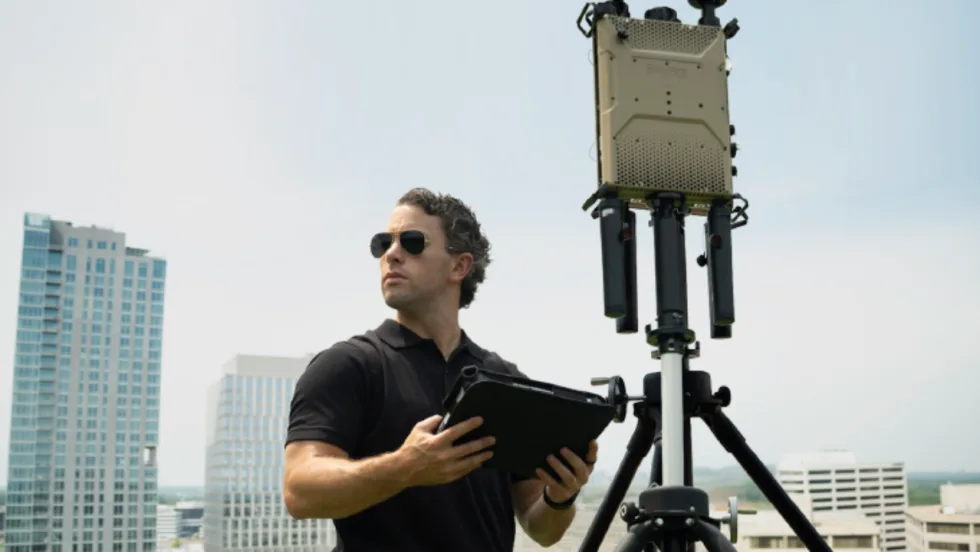
Motorola Solutions Completes Acquisition of D-Fend Solutions
Motorola Solutions has acquired D-Fend Solutions, an industry leader in counter-drone technology. This deal provides public safety and enterprise customers with access to advanced counter-unmanned aerial systems.
Read More →
ZeroEyes, Advantech & Camden Police Partner to Bring AI Gun Detection Technology to Delaware School District
ZeroEyes has partnered with Advantech and the Camden Police Department to deploy ZeroEyes’ AI gun detection and intelligent situational awareness platform at Delaware’s Caesar Rodney School District (CRSD).
Read More →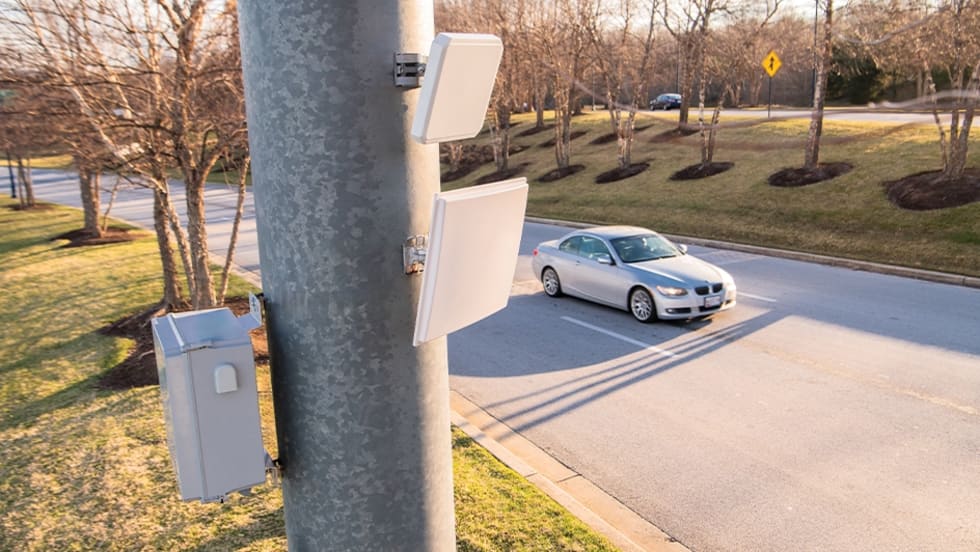
Leonardo U.S. Cyber & Security Solutions Introduces SignalTrace, the Next Evolution in Electronic Signature Detection Technology
SignalTrace reflects years of product refinement and a clearer expression of the technology’s purpose of recognizing and correlating electronic signatures in publicly broadcast wireless signals to reveal patterns, relationships, and trends that might otherwise go undetected.
Read More →
Pimloc Launches Secure File Sharing to Streamline Release of Redacted Video
Pimloc’s Secure File Sharing lets organizations deliver redacted video, audio, and documents through expiring, passcode-protected links, accelerating delivery while reducing security, compliance, and chain-of-custody risks.
Read More →