



Hobbling Our Investigations
Some elected officials seem compelled to introduce legislation aimed at protecting the rights of suspected criminals while impeding our investigations.

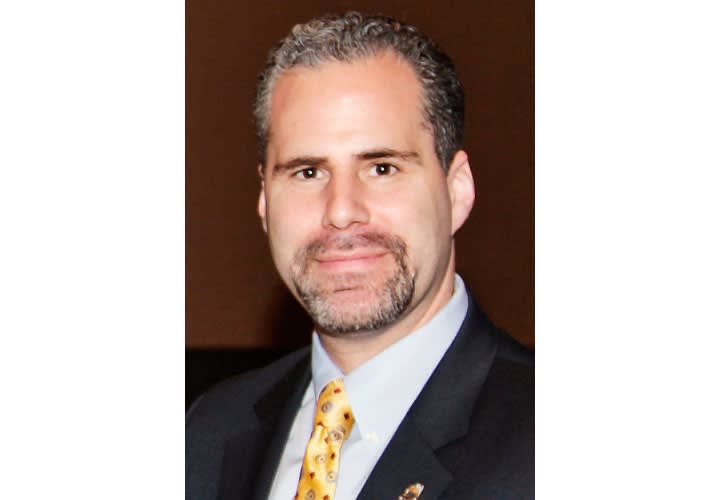
Photo courtesy of FLEOA.
Some elected officials seem compelled to introduce legislation aimed at protecting the rights of suspected criminals while impeding our investigations. On July 9, Rep. Edward Markey (D-Mass.) issued a press release alleging that law enforcement officers were abusing their authority and compromising the rights of innocent consumers by making excessive requests for cell phone data.
Markey derived his information from data he allegedly received from nine mobile wireless carriers. Markey declared that in 2011, "federal, state, and local law enforcement agencies made more than 1.3 million requests of wireless carriers for the cell phone records of consumers, and the number is increasing every year."
Lacking context, this comes across as an alarming statistic. But Markey neglected to mention that from 2010 to 2011, wireless communication transmissions increased by 123%.
Instead, Markey seeks to exploit an isolated statistic to suggest that law enforcement is engaging in an uncontrolled electronic fishing expedition. Does Markey really think we have the time or desire to recklessly request voluminous records irrespective of any specific investigative purpose?
Nonetheless, Markey attempts to validate his position by stating in his release, "We cannot allow privacy protections to be swept aside with the sweeping nature of these information requests, especially for innocent consumers. Law enforcement agencies are looking for a needle, but what are they doing with the haystack?"
Are we to infer that if a criminal pays his cell phone bill on time, he is an "innocent consumer?" Furthermore, suspected criminals should not be trivialized as "needles" in a misapplied analogy. We are not trampling on static straws of "hay," but are instead functioning in a fast-moving, dynamic environment. Law enforcement officers endure great risk and sacrifice pursuing terrorists, drug traffickers, fugitives, and violent gang members, while upholding the sacred due process of law.
Since Markey first alleged that law enforcement was violating the rights of innocent consumers, FLEOA recommended that he query the various internal affairs and inspector general units of our agencies to ascertain the number of substantiated cases of abuse. Markey opted not to pursue this reasonable course of action, but instead to rely exclusively on the isolated data that the carriers provided. Had he made the good faith effort we requested, he would have learned that there is no epidemic of law enforcement abuse.
Undeterred, Markey issued another press release on August 9, announcing the draft of his new legislation, The Wireless Surveillance Act of 2012. In the draft, he mischaracterizes legitimate law enforcement efforts to obtain cell phone records as a "startling number of requests."
Additionally, Markey's legislative proposal fails to recognize the rampant increase in identity theft and the harmful impact this crime has on "innocent consumers." Identity thieves rely on their access to wireless communications to accomplish their goals, and their mobility continues to pose a significant challenge to law enforcement. While Rep. Markey claims that his legislation would bring greater accountability, in effect it would only serve as a trip wire to disrupt law enforcement efforts to pursue criminals and their accomplices.
On May 17, FLEOA Vice President John Ramsey testified at a congressional hearing in opposition to H.R. 2168, the Geolocational Privacy and Surveillance Act. He represented federal law enforcement officers by opposing the implementation of further restrictions on law enforcement's ability to obtain wireless information. In his testimony, he posed an important question followed by poignant commentary: "Do we really want to slow down the apprehension of murderers and rapists so they can build their trophy wall by increasing the amount of legal documents necessary for law enforcement to gather information?"
With the advent of e-mail, Twitter, voice over Internet protocol, Facebook, instant messaging, and other wireless media, criminals have more tools than ever to accomplish their objectives. Recognizing the value of wireless communication, numerous criminals have dropped their guns and picked up smart phones and tablets. As the number of wireless communication options grows, so will the number of criminals seeking to exploit them. If Markey would take pause to consider this, he might come to realize that his legislation serves to protect criminal conduct and not innocent Americans.
Related:
More Technology

A police agency's guide to data-driven fleet management
Costs are rising and the public expects more transparency into how their tax dollars are spent. This e-book shows how police agencies can use fleet data to take control of fleet expenses while improving officer safety and demonstrating fiscal responsibility to the communities they serve.
Read More →
AI and analytics for law enforcement: Turning data into insights
Law enforcement agencies are managing more video, sensor data and digital evidence than ever before. Discover how AI and analytics can help turn that data into actionable insights that strengthen situational awareness, accelerate investigations and support more informed decisions.
Read More →
Vasco Electronics Adds Automatic Language Detection to Vasco Translator Q1
Vasco Electronics’ software update introduces hands-free language switching and expanded offline translation across 45 language pairs, empowering law enforcement, healthcare, and front-office enterprise teams
Read More →
North Miami Police Department Deploys Mark43
The North Miami Police Department has deployed Mark43 as part of its Five-Year Strategic Plan that represents its collective vision and goals for a more proactive police department, anchored by a core commitment to leveraging modern technology to enhance efficiency and public safety.
Read More →
Cellebrite Genesis for Enterprise Now Generally Available
Made available to the public sector in June, Cellebrite Genesis is serving a growing mix of national, regional, and local agencies worldwide, including some of the largest regional and metropolitan police departments. It is now available for enterprise organizations.
Read More →
2026 Vision FirstNet Users Summit to Host Emerging Leaders Training on Grassroots Advocacy for Public Safety
“Emerging Leaders Training: Understanding the Importance of Grassroots Advocacy for Public Safety," a session during the 2026 Vision FirstNet Users Summit, will offer a roadmap for unified advocacy at the federal level.
Read More →
Motorola Solutions Completes Acquisition of D-Fend Solutions
Motorola Solutions has acquired D-Fend Solutions, an industry leader in counter-drone technology. This deal provides public safety and enterprise customers with access to advanced counter-unmanned aerial systems.
Read More →
ZeroEyes, Advantech & Camden Police Partner to Bring AI Gun Detection Technology to Delaware School District
ZeroEyes has partnered with Advantech and the Camden Police Department to deploy ZeroEyes’ AI gun detection and intelligent situational awareness platform at Delaware’s Caesar Rodney School District (CRSD).
Read More →
Leonardo U.S. Cyber & Security Solutions Introduces SignalTrace, the Next Evolution in Electronic Signature Detection Technology
SignalTrace reflects years of product refinement and a clearer expression of the technology’s purpose of recognizing and correlating electronic signatures in publicly broadcast wireless signals to reveal patterns, relationships, and trends that might otherwise go undetected.
Read More →
Pimloc Launches Secure File Sharing to Streamline Release of Redacted Video
Pimloc’s Secure File Sharing lets organizations deliver redacted video, audio, and documents through expiring, passcode-protected links, accelerating delivery while reducing security, compliance, and chain-of-custody risks.
Read More →