



The Time is Right for Big Data Solutions
No longer the exclusive domain of the IT department, newer big data solutions are now designed to be used by front line analysts and investigators, with just one or two days of training and without the need for sophisticated oversight.


Illustration: istockphoto.com
Since its introduction nearly a decade ago, big data in the form of analytics has helped police agencies all over the world enhance decision making, improve strategies to combat crime, and ultimately solve—and prevent—more crimes. But while the benefits of mining and critically analyzing huge amounts of data are being realized in other developed countries from the United Kingdom to Canada to New Zealand, U.S. law enforcement agencies have generally been slower to jump on the bandwagon.
The reasons for slower adoption of big data tools in the United States are as varied as the nearly 18,000 state and local law enforcement agencies around the country. For many, the decision to buy or not to buy advanced crime analytics software often comes down to the usual culprit: lack of money. With few exceptions, police agencies across the country are faced with the prospect of doing more with less. And with increased pressure on local departments to put more feet on the street, do more in terms of community policing, and divert funding to equip all officers with body cams, it's often hard for departments to make big data solutions a top priority.
Money, however, is not the only issue slowing analytics adoption in the U.S. Unlike countries such as the U.K., the American law enforcement community is decentralized. It does not have a single system of data, standards, and operations. Rather, police departments here pride themselves on their individuality and independence. Walk into a meeting where 10 different departments are represented and you will likely see 10 different colors of uniforms.
The same holds true when it comes to information sharing. While it is often assumed that police departments all work in close cooperation with each other, the reality may be quite different.
None of this is news, nor is it a criticism of U.S. police departments. It simply reflects Americans' independent nature and the way in which law enforcement in this country is structured. It's the thing that makes us great but, in the case of analytics, it's also a major factor slowing analytics adoption.
Big data adoption is also hampered by the sheer size of the U.S. Sure, from a pure geographic standpoint, the U.S. and Canada are similar in size. But most of Canada's people live in Ontario or on the West Coast, near Vancouver. There are just over 200 police departments in all of Canada. Compare that to the U.S., where there are huge differences in the make-up of the population, not to mention lifestyle, attitudes, and so much more between, say, the Southwest and the Northeast.
Law enforcement policy-makers on the East Coast don't know what to make of their counterparts on the West Coast and vice versa. Similarly, the day-to-day needs and demands placed on a police chief in Kansas City can't help but be very different from those of his or her peers in Chicago, Los Angeles, Seattle, or Philadelphia.
All of these factors have contributed to slowing the adoption of analytics by U.S. police agencies. They are also complicated by perhaps the most intangible impediment: fear of technology. Whether they like to admit it or not, some law enforcement leaders are more comfortable taking an "old school" approach to police work. They prefer business as usual, which means feet on the street and files stacked on their detectives' desks, not sleek, state-of-the-art technology.
Change is never easy, especially when tried-and-true policing methods have proven to be effective. Decentralization also plays a part here – it's easier to take technology risks when it's mandated from above and much harder for the nearly 18,000 law enforcement chiefs in the U.S. to each take a step into the unknown. Nevertheless, change is coming, spurred in large part by the fact that the cost of advanced crime analytics is coming down.
Also easing the impact of costs to local agencies will be the dollars for big data solutions coming from the federal government. Those funds come with a catch, however, that gets at another obstacle. A significant portion of federal funds in the future will be earmarked for supporting regional initiatives. That means to be eligible for federal funds, many departments will have no choice but to work with their colleagues across jurisdictional boundaries. And while that may bring some initial resistance, regional cooperation will inevitably help to promote not just data sharing, but overall effectiveness.
The public is also demanding increased police effectiveness and efficiency. Responding to that pressure, police chiefs are recognizing that big data solutions can have a huge impact on reducing the number of man-hours it takes to sift through mountains of data in order to solve crimes. This is particularly important as law enforcement finds itself confronting not only the standard array of home break-ins, car thefts, and the like, but also the threat of "lone wolf" terrorist attacks, cybercrime, and highly sophisticated international trafficking rings.
Fortunately, as analytics software has become more affordable, it has also become easier to use. No longer the exclusive domain of the IT department, newer big data solutions are now designed to be used by front line analysts and investigators, with just one or two days of training and without the need for sophisticated oversight.
This has dramatically changed the role of law enforcement analysts. Formerly the department statistician, today's analyst has become a critically important member of the crime fighting team, capable of rapidly moving from tactical analysis to the focal point of providing intelligence on high-profile crimes and strategic crime-fighting initiatives.
Ease of use also comes into play as a new generation of officers, many of whom were raised on Google and Xbox, begin to take on leadership roles in their departments. These individuals are used to having the latest technology at their immediate disposal. They will readily see that a big data solution can not only play a critical role in more effective policing, but also pay for itself in savings of both time and money.
The growing use of cloud computing plays a role in this equation. Storing data in the cloud is becoming accepted as safe and secure, bringing with it economic advantages and removing the need for departments to provide highly specialized IT staff and infrastructure previously required to support analytical solutions.
All of these factors are combining to change the face of effective policing in the U.S. That will mean significantly greater acceptance of analytics to mine everything from social media files, emails, text messages, and the content of police RMS systems to phone records, license plate reader data, and ballistics data. Efficiencies of scale will dictate greater cooperation among departments, resulting in increased efficiency and more effective policing. Being able to quickly search and find critical information in data that police agencies already have in hand will undoubtedly improve decision making and officer safety, while helping to solve cases more quickly.
In my 40-plus years of experience as a law enforcement professional, I have seen great progress in U.S. law enforcement agencies adopting technology to help them accomplish their missions. Despite the obstacles, they're moving steadily forward, and now a new generation of leaders seems poised to accelerate that trend and pace.
Louis F. Quijas formerly held positions as police chief of High Point, NC; assistant director of the FBI; and assistant secretary for the Office of State and Local Law Enforcement at the Department of Homeland Security. He currently serves as senior executive, law enforcement and homeland security, with Wynyard Group.
More Technology

A police agency's guide to data-driven fleet management
Costs are rising and the public expects more transparency into how their tax dollars are spent. This e-book shows how police agencies can use fleet data to take control of fleet expenses while improving officer safety and demonstrating fiscal responsibility to the communities they serve.
Read More →
AI and analytics for law enforcement: Turning data into insights
Law enforcement agencies are managing more video, sensor data and digital evidence than ever before. Discover how AI and analytics can help turn that data into actionable insights that strengthen situational awareness, accelerate investigations and support more informed decisions.
Read More →
Vasco Electronics Adds Automatic Language Detection to Vasco Translator Q1
Vasco Electronics’ software update introduces hands-free language switching and expanded offline translation across 45 language pairs, empowering law enforcement, healthcare, and front-office enterprise teams
Read More →

North Miami Police Department Deploys Mark43
The North Miami Police Department has deployed Mark43 as part of its Five-Year Strategic Plan that represents its collective vision and goals for a more proactive police department, anchored by a core commitment to leveraging modern technology to enhance efficiency and public safety.
Read More →
Cellebrite Genesis for Enterprise Now Generally Available
Made available to the public sector in June, Cellebrite Genesis is serving a growing mix of national, regional, and local agencies worldwide, including some of the largest regional and metropolitan police departments. It is now available for enterprise organizations.
Read More →
2026 Vision FirstNet Users Summit to Host Emerging Leaders Training on Grassroots Advocacy for Public Safety
“Emerging Leaders Training: Understanding the Importance of Grassroots Advocacy for Public Safety," a session during the 2026 Vision FirstNet Users Summit, will offer a roadmap for unified advocacy at the federal level.
Read More →
Motorola Solutions Completes Acquisition of D-Fend Solutions
Motorola Solutions has acquired D-Fend Solutions, an industry leader in counter-drone technology. This deal provides public safety and enterprise customers with access to advanced counter-unmanned aerial systems.
Read More →
ZeroEyes, Advantech & Camden Police Partner to Bring AI Gun Detection Technology to Delaware School District
ZeroEyes has partnered with Advantech and the Camden Police Department to deploy ZeroEyes’ AI gun detection and intelligent situational awareness platform at Delaware’s Caesar Rodney School District (CRSD).
Read More →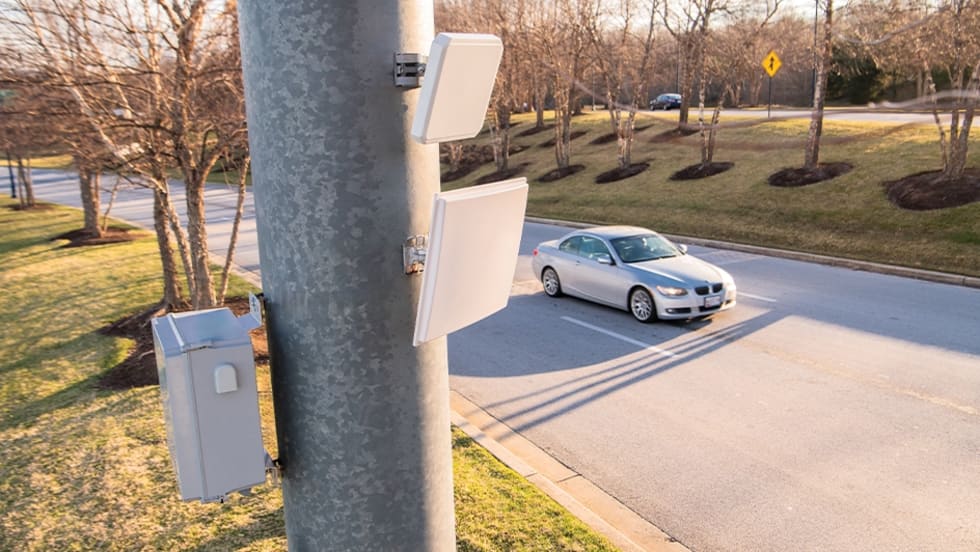
Leonardo U.S. Cyber & Security Solutions Introduces SignalTrace, the Next Evolution in Electronic Signature Detection Technology
SignalTrace reflects years of product refinement and a clearer expression of the technology’s purpose of recognizing and correlating electronic signatures in publicly broadcast wireless signals to reveal patterns, relationships, and trends that might otherwise go undetected.
Read More →
Pimloc Launches Secure File Sharing to Streamline Release of Redacted Video
Pimloc’s Secure File Sharing lets organizations deliver redacted video, audio, and documents through expiring, passcode-protected links, accelerating delivery while reducing security, compliance, and chain-of-custody risks.
Read More →