



Real Time Networks: Using Smart Technology to Cut Costs
Agencies are finding that smart technology can help them stretch their budgets and track their equipment

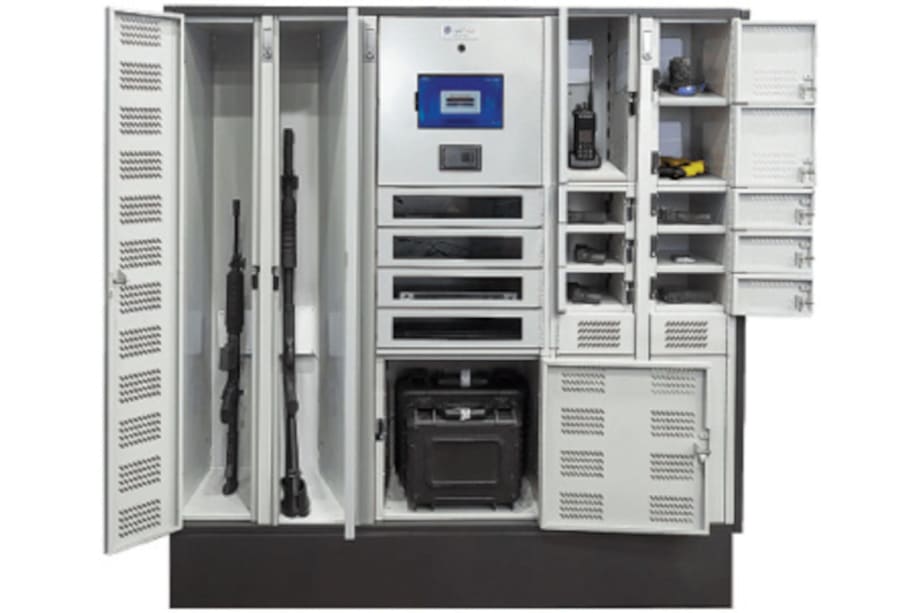
AssetTracer from Real Time Networks is an intelligent storage solution for securely storing and tracking electronics, weapons, evidence, and other sensitive assets. The smart technology helps agencies control access and automates a full audit trail.
The costs of policing have risen steadily over the past decade. And with every tick upwards, law enforcement agencies have faced more pressure from government officials and the public to contain those costs.
That pressure will only continue to mount. As a result, agencies need to look closely at their personnel and non-personnel budgets and determine how to spend most effectively to serve their communities.
Smart technology can be one of the solutions to this complex problem. It has the potential to transform not only frontline police work, but also how large and small agencies manage their offices for better cost containment.
With smart technology, you can focus personnel where they can deliver the most value.
Personnel expenditures make up a huge part of most police budgets. As budgets and offices grow, more full-time employees are needed just to keep the agency running. But they are often not utilized effectively.
That’s not a major revelation to any law enforcement leader. It is the reason many law enforcement agencies have turned to smart technology in recent years to automate work that doesn’t necessarily need to be done by people. For example, deploying license plate readers to monitor vehicles, adding motion capture systems to surveillance cameras, or using predictive policing software to gauge where to best use patrol officers.
The power of smart technology for improving frontline police work is evident. But agencies looking to do more with less can also use smart technology to streamline some of the administrative work that is a necessary part of day-to-day police operations.
You can streamline police administration with smart technology.
Look for ways to cost-effectively automate operations that cut into your personnel budget. For example, many agencies can benefit by taking a closer look at how they track and manage their equipment.
Modern policing requires a large volume of equipment such as weapons, radar guns, duty bags, 2-way radios, TASERs, body cameras, laptops, narcotics, and biohazardous materials. Using staff to manage this equipment remains an all-too-common practice. Equipment management needs often start small but grow over time. Smart technology solutions for tracking equipment and managing fleets have many benefits for the modern police force.
When you make work measurable, you make it predictive.
One of the most powerful aspects of smart technology is that it can gather its own metrics. It can help you accurately track when, where, and how equipment is distributed. Real-time reporting can help you better manage your operational capabilities, redistribute equipment where it is needed the most, and ensure effective management of controlled substances, evidence chain-of-custody and regulated equipment.
Over time, the data collected from smart technology systems can also help you control equipment loss and make more accurate predictions about what you need to purchase for upcoming inventory refreshes. So not only will a smart system reduce the number of full-time employees required to manage equipment, but it can also automatically help you optimize your equipment budgets.
Now is the time to push for change.
Twenty-first century policing needs to be fast, agile, and adaptable. It will also need to be data driven.
The concept of data-driven policing still makes some people bristle, but it shouldn’t. Data will never replace human expertise and experience in policing. On the contrary, good data collected from an agency’s smart technology systems will make its experts even more effective.
With law enforcement agencies facing continued pressure to do more with less, smart technology innovations offer a cost-effective strategy to build more streamlined, smart, and effective police forces.
Mike French is CEO of Real Time Networks makers of the Asset Tracer smart locker solution. Go to here for more information.
More Technology

A police agency's guide to data-driven fleet management
Police officers depend on their vehicles every shift, and the data those vehicles produce can be used to protect them. This ebook breaks down how to improve officer safety, control costs and build stronger public accountability with a foundation of fleet data.
Read More →
AI and analytics for law enforcement: Turning data into insights
Law enforcement agencies are managing more video, sensor data and digital evidence than ever before. Discover how AI and analytics can help turn that data into actionable insights that strengthen situational awareness, accelerate investigations and support more informed decisions.
Read More →
Vasco Electronics Adds Automatic Language Detection to Vasco Translator Q1
Vasco Electronics’ software update introduces hands-free language switching and expanded offline translation across 45 language pairs, empowering law enforcement, healthcare, and front-office enterprise teams
Read More →

North Miami Police Department Deploys Mark43
The North Miami Police Department has deployed Mark43 as part of its Five-Year Strategic Plan that represents its collective vision and goals for a more proactive police department, anchored by a core commitment to leveraging modern technology to enhance efficiency and public safety.
Read More →
Cellebrite Genesis for Enterprise Now Generally Available
Made available to the public sector in June, Cellebrite Genesis is serving a growing mix of national, regional, and local agencies worldwide, including some of the largest regional and metropolitan police departments. It is now available for enterprise organizations.
Read More →
2026 Vision FirstNet Users Summit to Host Emerging Leaders Training on Grassroots Advocacy for Public Safety
“Emerging Leaders Training: Understanding the Importance of Grassroots Advocacy for Public Safety," a session during the 2026 Vision FirstNet Users Summit, will offer a roadmap for unified advocacy at the federal level.
Read More →
Motorola Solutions Completes Acquisition of D-Fend Solutions
Motorola Solutions has acquired D-Fend Solutions, an industry leader in counter-drone technology. This deal provides public safety and enterprise customers with access to advanced counter-unmanned aerial systems.
Read More →
ZeroEyes, Advantech & Camden Police Partner to Bring AI Gun Detection Technology to Delaware School District
ZeroEyes has partnered with Advantech and the Camden Police Department to deploy ZeroEyes’ AI gun detection and intelligent situational awareness platform at Delaware’s Caesar Rodney School District (CRSD).
Read More →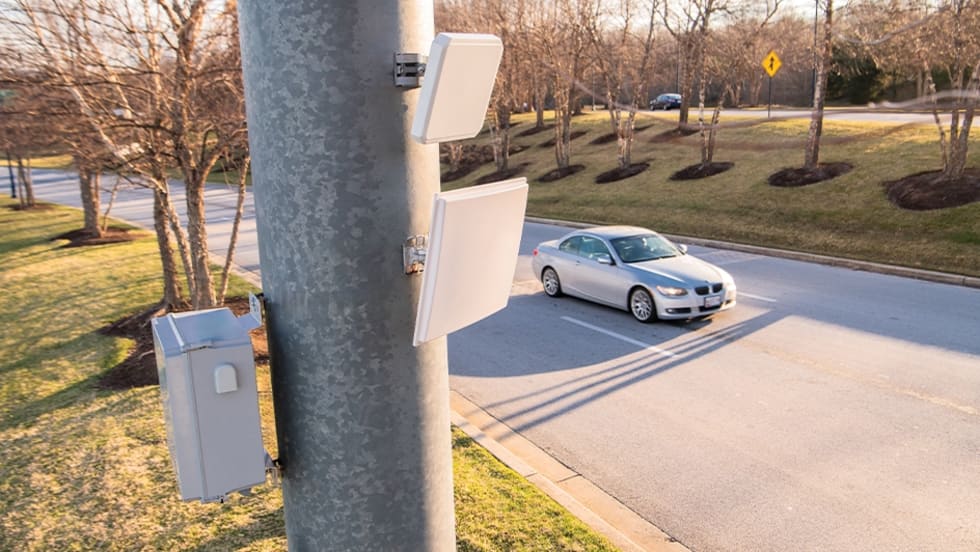
Leonardo U.S. Cyber & Security Solutions Introduces SignalTrace, the Next Evolution in Electronic Signature Detection Technology
SignalTrace reflects years of product refinement and a clearer expression of the technology’s purpose of recognizing and correlating electronic signatures in publicly broadcast wireless signals to reveal patterns, relationships, and trends that might otherwise go undetected.
Read More →
Pimloc Launches Secure File Sharing to Streamline Release of Redacted Video
Pimloc’s Secure File Sharing lets organizations deliver redacted video, audio, and documents through expiring, passcode-protected links, accelerating delivery while reducing security, compliance, and chain-of-custody risks.
Read More →