



6 Things to Know About E-Citation
Electronic citation streamlines the ticketing process to benefit law enforcement and the public.

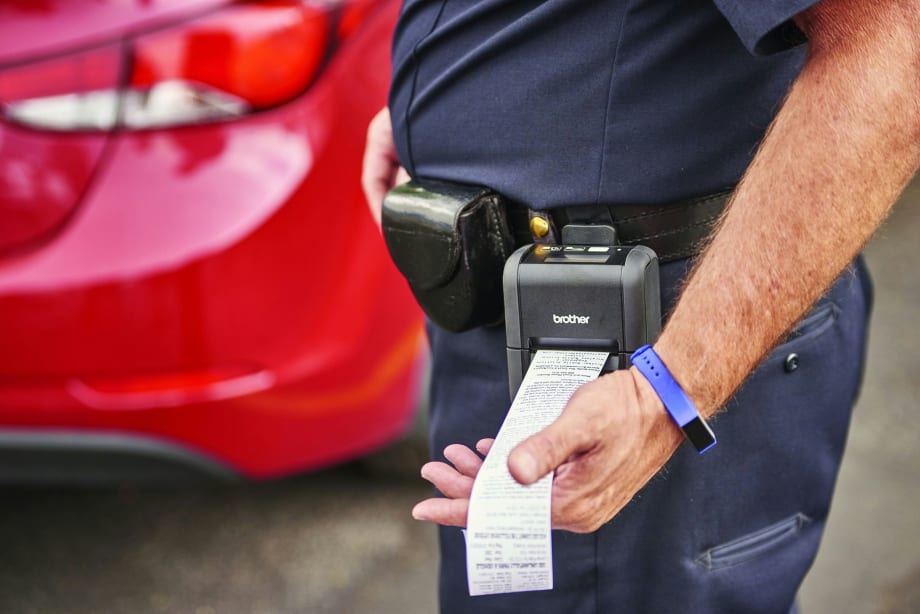
Portable printers designed to work with e-citation software create easily read citations, unlike handwritten tickets that can be difficult to decipher.
Photo: Brother Mobile Solutions
Electronic citation or ticketing (e-citation) is an automated form of creating and issuing citations to offenders, and collecting the related data. Instead of filling out a paper form during a traffic stop, a law enforcement officer can scan the bar code on a driver's license and use the transmitted information to automatically populate a citation form on an electronic device. The officer can then print the citation for the motorist and send the citation digitally to the courthouse. Here are some other things you should know about this increasingly popular technology.
1) Reduces Errors
Creating fewer chances for mistakes leads to more accurate reporting throughout the system. Possible errors in handwritten paper tickets include illegible writing, incomplete information, misplacing tickets, and vehicle code violations not being written down correctly. A full 10% to 15% of handwritten tickets are dismissed due to illegibility. In contrast, a mere 1% to 2% of e-citations suffer from errors, which translates to an impressive 98% citation accuracy for e-citation.
While an officer's handwriting might be difficult to decipher, electronically submitted data and printed tickets use neat, uniform type that is easy to read. And instead of entering data at multiple points throughout the system, with e-citation the information is entered once and populated electronically across the system, all the way to the court. This effectively eliminates the room for data input discrepancies, which can lead to tickets being dismissed.
Another possible error with paper tickets is the wrong person being identified because of the driver's name or license being improperly recorded. This can be costly and embarrassing. Or in the case of a dangerous offender being misidentified, it could pose a risk to officers and citizens.
2) Increases Efficiency
It takes an officer 10 to 15 minutes to manually issue a citation. In contrast, e-citations take two to three minutes and eliminate up to 200 keystrokes. Officers can spend less time on paperwork and more time out on patrol.
On the administrative side of e-citation, ticket processing time is significantly reduced. In the past, it could take 12 days for the information from the carbon copy of a handwritten ticket to get to the courts and be officially entered into the system. Now, that information collected by the officer on the scene of a traffic stop travels electronically into the system in just seconds. This also means that once the information is entered it can be used to provide more complete information about traffic violations and accident data.
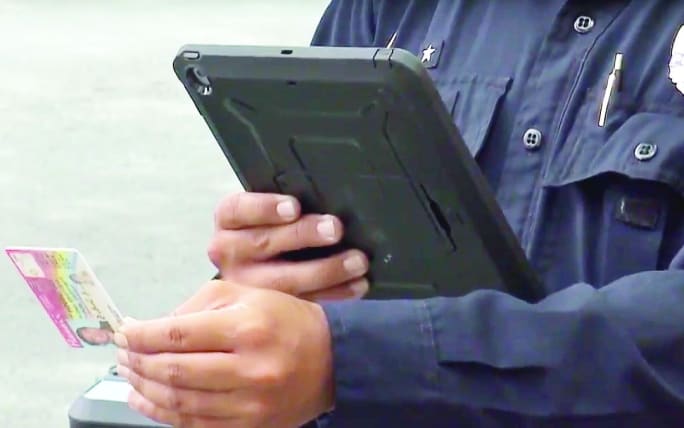
Software used to capture and transmit a motorist's data can often be used on various devices, such as tablets and smart phones. This means officers don't need to go back to their patrol vehicles, which saves more time.
Photo: TBL Systems
3) Makes Ticketing Safer
Because officers can issue citations more quickly using e-citation, they spend less time on the side of the road, where they are in danger of being struck by vehicles, as are any occupants of the stopped vehicle. This is safer for officers and motorists.
According to the National Law Enforcement Officers Memorial Fund, traffic-related fatalities accounted for over 36% of officer deaths in the first half of 2018. Of those traffic-related fatalities, over 25% were due to roadside deaths. Since e-citation systems can reduce ticketing time by more than 50%, their use makes officers inherently safer.
It should also be noted that during the time that must be spent on the side of the road issuing a ticket, since manual entry is not required the officer can focus more attention on the offender. Increased situational awareness is always a boon to officer safety.
As a bonus, in addition to getting motorists out of a potentially dangerous situation more quickly, having a traffic stop over more quickly gets them on the road more quickly, resulting in more "satisfied customers."
4) Requires Certain Technology
One of the barriers to implementing e-citation is the necessary technology. To access software or other information from the cloud and to transmit the data collected when issuing a citation on a traffic stop, officers need reliable wireless connectivity out in the field. And all of the hardware and software being used must work together. The specifics will be different for every department based on what technology they already have in use and their individual needs.
One necessity is a Records Management System (RMS) that contains or is compatible with the e-citation solution being used. Multiple RMS and e-citation vendors can be used across a region, such as a state, looking to increase e-citation use. But to streamline the process and minimize errors, there should be agreed upon standards regarding how e-citation data is collected, managed, and reported across all of these agencies.
To print out tickets and give them to motorists, officers also must have mobile printers with them. They can be worn by officers or affixed inside officers' vehicles. In addition to e-citation-specific devices, many e-citation programs can be used on the smart phones and tablets that officers are already using for other tasks.
5) Saves Money
There is an upfront cost for e-citation, but multiple studies show there is a relatively rapid return on investment thanks to increased revenue and fewer administrative costs. For example, an e-citation system can save $560,000 in revenue for a city that issues 60,000 citations per year. And when it comes to officer productivity, if 20 patrol officers issue five traffic citations per day, e-citation can save 1,600 hours of patrol time per year, potentially reducing overtime expenditures.
6) Funding Resources Available
As for most costly items needed for policing in the modern age, there are grants available for e-citation systems, and they're worth pursuing. It's also a good idea to collaborate with surrounding agencies whenever possible to share related costs.
Yet another way to pay for the upfront and ongoing costs of e-citation software and/or hardware is passing the cost along to offenders. States such as Illinois, Tennessee, and Virginia have passed legislation that adds a fine surcharge to fund e-citation. This is usually a flat fee added to an offender's fine. The fee can be divided between the state and the agency issuing the citation. Such legislation typically specifies how the funds can be used. This includes all costs related to purchasing e-citation systems as well as necessary ongoing maintenance, repair, overhaul, and replacement of hardware and software related to the systems.
Although it requires investment and an adjustment period at the beginning, once most officers and agencies start using e-citation they don't want to go back to paper tickets.
Thank you to Brother Mobile Solutions (www.brothermobilesolutions.com) and TBL Systems Inc. (formerly Thin Blue Line Reporting) (www.tblsys.com) for contributing their expertise and assisting in the development of this article.
More Technology
TOUGHBOOK in Action at the Third Largest County in the Nation – Harris County, TX
Learn how Harris County, one of the nation’s largest counties, modernized its law enforcement fleet with TOUGHBOOK® rugged laptops—strengthening security, productivity, and operational readiness across every unit.
Read More →
How Motorola Solutions’ New “Insights” Platform Helps Public Safety Agencies Identify Trends to Improve Their Operations
Motorola Solutions has introduced Insights, which leverages Assist, its mission-critical artificial intelligence (AI), to address these challenges and shape what’s next for public safety analytics and reporting technology.
Read More →
What Qualifies a Laptop as Rugged or Fully Rugged?
Police officers face a wide range of working conditions that can damage or even destroy a regular consumer laptop. Learn what qualifies a computer as rugged or fully rugged and why those devices are vital for law enforcement.
Read More →
Panasonic Connect Launches the Toughbook 34 and Toughbook G3, Fully Rugged 2-in-1 Mobile Computers
Panasonic Connect has launched the Toughbook 34 and Toughbook G3 to facilitate in-vehicle dispatch, records management, and mobile command operations from any location.
Read More →
A police agency's guide to data-driven fleet management
Costs are rising and the public expects more transparency into how their tax dollars are spent. This e-book shows how police agencies can use fleet data to take control of fleet expenses while improving officer safety and demonstrating fiscal responsibility to the communities they serve.
Read More →
AI and analytics for law enforcement: Turning data into insights
Law enforcement agencies are managing more video, sensor data and digital evidence than ever before. Discover how AI and analytics can help turn that data into actionable insights that strengthen situational awareness, accelerate investigations and support more informed decisions.
Read More →
Vasco Electronics Adds Automatic Language Detection to Vasco Translator Q1
Vasco Electronics’ software update introduces hands-free language switching and expanded offline translation across 45 language pairs, empowering law enforcement, healthcare, and front-office enterprise teams
Read More →
North Miami Police Department Deploys Mark43
The North Miami Police Department has deployed Mark43 as part of its Five-Year Strategic Plan that represents its collective vision and goals for a more proactive police department, anchored by a core commitment to leveraging modern technology to enhance efficiency and public safety.
Read More →
Cellebrite Genesis for Enterprise Now Generally Available
Made available to the public sector in June, Cellebrite Genesis is serving a growing mix of national, regional, and local agencies worldwide, including some of the largest regional and metropolitan police departments. It is now available for enterprise organizations.
Read More →
2026 Vision FirstNet Users Summit to Host Emerging Leaders Training on Grassroots Advocacy for Public Safety
“Emerging Leaders Training: Understanding the Importance of Grassroots Advocacy for Public Safety," a session during the 2026 Vision FirstNet Users Summit, will offer a roadmap for unified advocacy at the federal level.
Read More →