



States Push For "Smarter" Driver's Licenses
Lawmakers and government agencies are pushing for "smart" driver's licenses to reduce identity fraud in the wake of Sept. 11. But many fear this will lead to virtual national identity cards that could infringe upon the private rights of citizens.

Lawmakers and government agencies are pushing for "smart" driver's licenses to reduce identity fraud in the wake of Sept. 11. But many fear this will lead to virtual national identity cards that could infringe upon the private rights of citizens.
Proposals to make identification more difficult to duplicate have gained more support since investigators discovered some of the hijackers of the planes that crashed into the WTC and the Pentagon had used fraudulent identification.
Bills are already being created on Capitol Hill. Illinois Democrat Dick Durbin in the Senate and Virginia Democrat Jim Moran in the House are preparing bills that would provide funding to update and standardize drivers' licenses. Moran's proposal would also provide funding for states to develop smart-card capabilities. Congress has also directed the U.S. Department of Transportation to develop a set of standards on its own.
Some measures being given serious consideration for drivers' license identification include standardized applications, digitized retinal or handprint scans, and wider access to drivers' records.
National standardization of these additions to drivers' licenses could make forgery nearly impossible and enable authorities to more easily catch criminals who cross state lines.
Already in use in eight states and the District of Columbia, biometric identifiers encode a body part such as a fingerprint or retina to establish what proponents say is ''unforgeable'' proof of identity.
State and federal authorities such as the FBI would also be able to easily link their records under the proposals made by the Association of American Motor Vehicle Administrators (AAMVA). This would allow a police officer in Florida, for example, to call up the criminal record of someone stopped with a Michigan driver's license.
But the system could also encourage crimes like identity theft by making personal records more readily available, said EPIC's Rotenberg.
States are only looking to boost the effectiveness of the current system, said a spokesman for the AAMVA. Private businesses, such as airlines, could use the biometric data to verify identity, but not to tap into the underlying databases.
More Technology

Vasco Electronics Adds Automatic Language Detection to Vasco Translator Q1
Vasco Electronics’ software update introduces hands-free language switching and expanded offline translation across 45 language pairs, empowering law enforcement, healthcare, and front-office enterprise teams
Read More →
North Miami Police Department Deploys Mark43
The North Miami Police Department has deployed Mark43 as part of its Five-Year Strategic Plan that represents its collective vision and goals for a more proactive police department, anchored by a core commitment to leveraging modern technology to enhance efficiency and public safety.
Read More →
Cellebrite Genesis for Enterprise Now Generally Available
Made available to the public sector in June, Cellebrite Genesis is serving a growing mix of national, regional, and local agencies worldwide, including some of the largest regional and metropolitan police departments. It is now available for enterprise organizations.
Read More →

2026 Vision FirstNet Users Summit to Host Emerging Leaders Training on Grassroots Advocacy for Public Safety
“Emerging Leaders Training: Understanding the Importance of Grassroots Advocacy for Public Safety," a session during the 2026 Vision FirstNet Users Summit, will offer a roadmap for unified advocacy at the federal level.
Read More →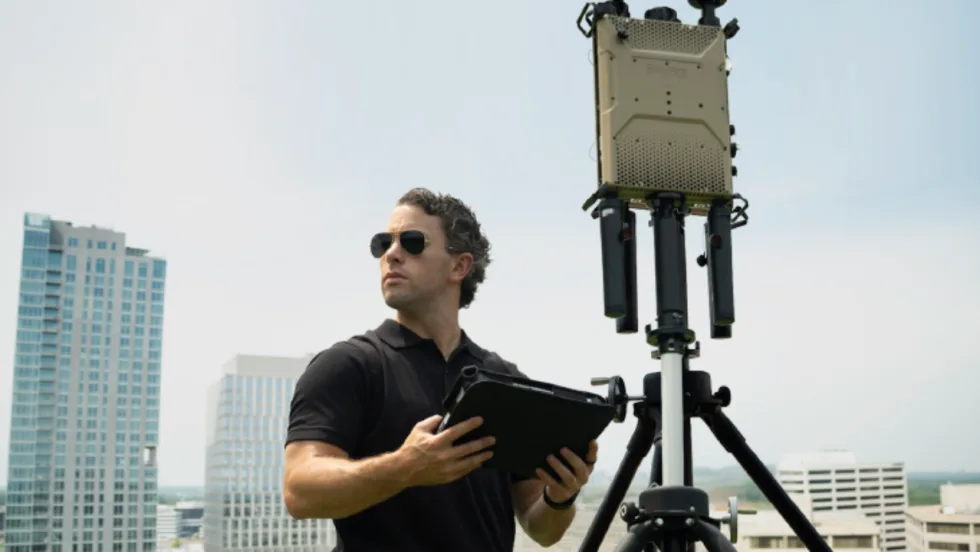
Motorola Solutions Completes Acquisition of D-Fend Solutions
Motorola Solutions has acquired D-Fend Solutions, an industry leader in counter-drone technology. This deal provides public safety and enterprise customers with access to advanced counter-unmanned aerial systems.
Read More →
ZeroEyes, Advantech & Camden Police Partner to Bring AI Gun Detection Technology to Delaware School District
ZeroEyes has partnered with Advantech and the Camden Police Department to deploy ZeroEyes’ AI gun detection and intelligent situational awareness platform at Delaware’s Caesar Rodney School District (CRSD).
Read More →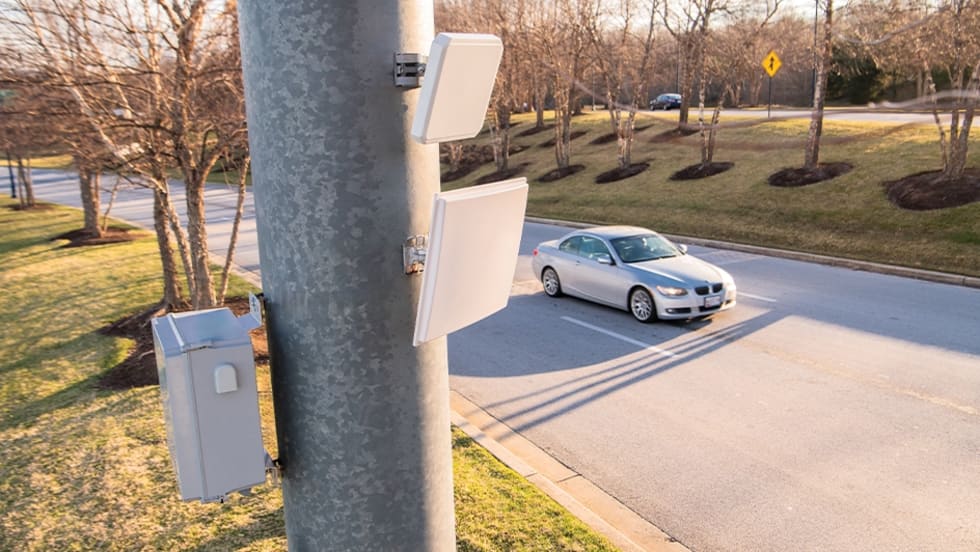
Leonardo U.S. Cyber & Security Solutions Introduces SignalTrace, the Next Evolution in Electronic Signature Detection Technology
SignalTrace reflects years of product refinement and a clearer expression of the technology’s purpose of recognizing and correlating electronic signatures in publicly broadcast wireless signals to reveal patterns, relationships, and trends that might otherwise go undetected.
Read More →
Pimloc Launches Secure File Sharing to Streamline Release of Redacted Video
Pimloc’s Secure File Sharing lets organizations deliver redacted video, audio, and documents through expiring, passcode-protected links, accelerating delivery while reducing security, compliance, and chain-of-custody risks.
Read More →
2026 Vision FirstNet Users Summit to Explore How FirstNet Fusion and LMR Are Redefining Mission-Critical Communications
One of the sessions at the 2026 Vision FirstNet Users Summit will highlight hybrid devices bridging broadband and LMR. “Bridging Broadband and LMR: FirstNet Fusion and the Rise of Hybrid Devices” will explore how public safety agencies can modernize their communications environments while maintaining the reliability of land mobile radio.
Read More →
Cellebrite Expands Exclusive SkySafe Partnership to Deliver Immediate Drone Detection and Airspace Intelligence for Digital Investigations at Scale
By integrating SkySafe's drone detection and airspace intelligence with Cellebrite's platform, agencies can connect real-time and historical UAV flight data with mobile forensic evidence, all in one place.
Read More →