



Demystifying Miranda
One of the most blatant mistakes entertainers insist on perpetuating is the notion that Miranda warnings have to be given immediately upon the suspect being hooked up.

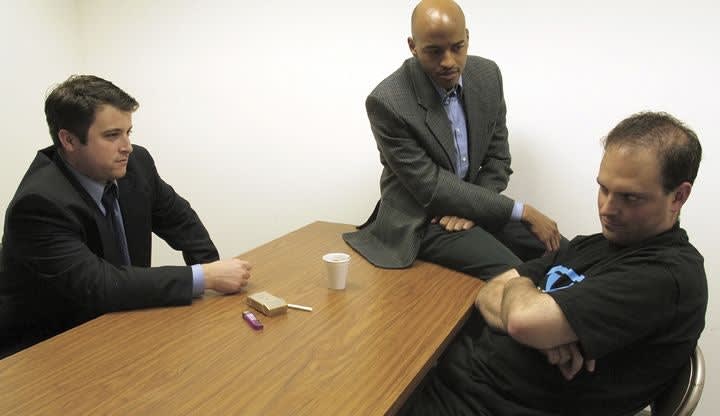
Ever see Hollywood get Miranda right? Me neither. That's understandable, since screenwriters are not constitutional scholars, and since their job is to entertain-not teach.
The public often gets it wrong, too. Also understandable, since people may have picked up their "knowledge" of Miranda from watching TV, or from reading fiction.
But while actors, authors, and audiences can keep getting it wrong, the real police officers and lawyers and judges can't. The consequences of mistakes in real cases are too serious.
One of the most blatant mistakes entertainers insist on perpetuating is the notion that Miranda warnings have to be given immediately upon the suspect being hooked up. That's both legally and tactically incorrect, in most cases. But the "bright line" the Supreme Court thought it was creating in 1966 to tell police precisely when to Mirandize a suspect in order to ensure admissibility of any incriminatory statements has been flickering ever since. Confusion abounds.
Want to know a secret? It's really not that complicated.
In Miranda v. Arizona, the Supreme Court created a judicial presumption that any police interrogation conducted while the subject is in custody inherently urges the person to talk. That meant that any statement obtained through a police interrogation while a person was in custody, without a declaration of his rights, could not be admitted in his criminal prosecution, because of the Fifth Amendment privilege against compelling a person to testify against himself.
To neutralize this presumed inherent compulsion and to allow police to obtain admissible statements from guilty criminals, the Court designed the now-familiar admonition of the rights to silence and counsel, and the warning that statements could be used in court. In Miranda and subsequent cases, the Court defined the conditions for finding a valid waiver that would make statements admissible.
The two factors that are presumed to generate the inherent compulsion-custody and police interrogation-are therefore the two factors that have to be present and apparent to the suspect in order to trigger the need to warn. As the Court noted in Illinois v. Perkins, "It is the premise of Miranda that the danger of coercion results from the interaction of custody and official interrogation."
Therefore, if you're interrogating someone who is not in custody, warnings are not required. "Miranda did not reach investigative questioning of a person not in custody." (Schneckloth v. Bustamonte.) "Police officers are not required to administer Miranda warnings to everyone whom they question." (Oregon v. Mathiason.)
Likewise, Miranda does not cover a person who is in custody but is not being subjected to police interrogation. Warnings are required, "not where a suspect is simply taken into custody, but rather where a person in custody is subjected to interrogation." (Rhode Island v. Innis.) That's why "volunteered statements of any kind are not affected by our holding today." (Miranda v. Arizona.) That's also why there is no legal reason to do what the TV cops do and prematurely give warnings at the moment of arrest if you're not yet ready to interrogate.
Once you realize that it's only the combination of custody and police interrogation that engages Miranda, the next analytical step is defining "custody" and "interrogation," so that you recognize when they're present.
Custody
The Supreme Court's definition of "custody" has evolved. Originally, the Court spoke of the need to guard against compulsion "whenever the suspect is taken into custody or is otherwise deprived of his freedom of action in any significant way." (Miranda v. Arizona.) This guideline proved unworkable. Some lower courts thought that Miranda applied whenever the interrogated person was not free to leave (the traditional test for a Fourth Amendment detention); still other opinions examined whether there was probable cause to arrest, or whether the officer had subjectively decided to make an arrest, or whether questioning had occurred in a police station.
The Supreme Court later narrowed the definition of "custody" to mean either an actual arrest or the level of physical restraint typically imposed on an arrestee. "The ultimate inquiry is simply whether there is a formal arrest, or restraint on freedom of movement of the degree associated with a formal arrest." (California v. Beheler.)
This makes it reasonably easy to tell if someone is in custody, for Miranda purposes. If he has been told he is under arrest, he's in custody. Or, even if no announcement has been made and even though no Fourth Amendment arrest would necessarily be found, if he is nevertheless treated like an arrested person, he's in custody for purposes of receiving Miranda warnings.
For example, during a high-risk stop, a person who is ordered down at gunpoint is in Miranda custody. A person who is detained in handcuffs, or is locked in the rear-seat cage of a police car, or is detained in a police facility, or is surrounded by an inordinate number of officers is in Miranda custody. (Orozco v. Texas.) And a person who is in jail is normally considered to be in custody, even though he may have been arrested for some other crime. (Mathis v. United States.)
One by one, the alternative definitions of "custody" have been rejected by the Supreme Court. See, for example, Stansbury v. California (officer's focus of suspicion does not create custody); Berkemer v. McCarty (neither probable cause to arrest nor officer's intent to arrest constitutes custody); Pennsylvania v. Bruder (ordinary street detention without arrest-like restraints is not custody); and California v. Beheler (voluntary stationhouse appearance for questioning is not custody).
"Custody" is simply "the functional equivalent of formal arrest," according to Berkemer v. McCarty.
Interrogation
Just as "custody" is defined as an arrest or its functional equivalent, "interrogation" is simply "express questioning or its functional equivalent." (Rhode Island v. Innis.)
In Innis, the Supreme Court explained that "interrogation" refers not only to overt questions, but also to any "words or actions on the part of police (other than those normally attendant to arrest and custody) that the police should know are reasonably likely to elicit an incriminating response."
Examples of conduct that could constitute "interrogation" are confronting the suspect with evidence of his guilt, making an accusatory statement, or even conducting a "reverse lineup" where a feigned "witness" identifies the suspect aloud. (Arizona v. Mauro.)
Since words or actions "normally attendant to arrest" are not subject to Miranda, booking questions and normal custodial interactions are not covered. (Pennsylvania v. Muniz.)
Exceptions
To date, the Supreme Court has recognized two exceptions to the general admissibility rule that custodial police interrogation must be preceded by warnings and waiver. (1) Where questions are directed toward neutralizing an immediate threat to officer or public safety, no warnings are required. (New York v. Quarles.) (2) Miranda does not apply to custodial interrogation by an undercover officer posing as a fellow prisoner. (Illinois v. Perkins.) But note that after indictment or arraignment, the Sixth Amendment right to counsel will prevent questioning on the charged case. (United States v. Henry.)
No Gratuity Required
Because "Miranda warnings may inhibit persons from giving information" (Oregon v. Elstad) and may "deter a suspect from responding" (New York v. Quarles), they should not be gratuitously administered where they do not apply. Despite what screenwriters believe, Miranda warnings are legally required if, and only if, custodial police interrogation is imminent.
Attorney Devallis Rutledge, a former police officer and prosecutor, defends officers and agencies in federal civil rights cases at the California law offices of Manning & Marder, Kass, Ellrod, Ramirez.
More Patrol

Adept Armor Introduces Two New Rifle Plates
Adept Armor has launched two new Level IV ballistic plates, the Emperor and the Archon Mark 2, which brings Adept Armor’s new Quatroid ceramic to the high-threat, performance-value center of the range at 5.2 pounds.
Read More →
POLICE Product Test: Benchmade Bailout
The Benchmade Bailout is a slim, lightweight carry knife with a deep-ride pocket clip and comes in a variety of blade steels and scales. Here is a detailed review of the Taiga Green Bailout, released earlier this year.
Read More →
NLEOMF Announces July 2026 Officer of the Month
NLEOMF honored a Michigan deputy sheriff as the July 2026 Officer of the Month for rescuing a trapped driver from a burning vehicle following a Fourth of July crash.
Read More →
Streamlight to Showcase Newest Lighting Products at National Safety Council’s Safety Congress & Expo 2026
Streamlight will showcase its latest lights, including the Portable Scene Light III and the LiteBox 1Million, at the 2026 National Safety Council (NSC) Safety Congress & Expo.
Read More →
The 2027 World Police & Fire Games Set for Perth, Australia
The 2027 World Police & Fire Games (WPFG) will take place in Perth, Western Australia, from Friday, March 12 through Sunday, March 21, 2027.
Read More →
5.11 Partners with National Fallen Firefighters Foundation to Support #ForThe343
5.11 has joined the nationwide movement honoring the 343 New York City Fire Department firefighters lost on Sept. 11, 2001.
Read More →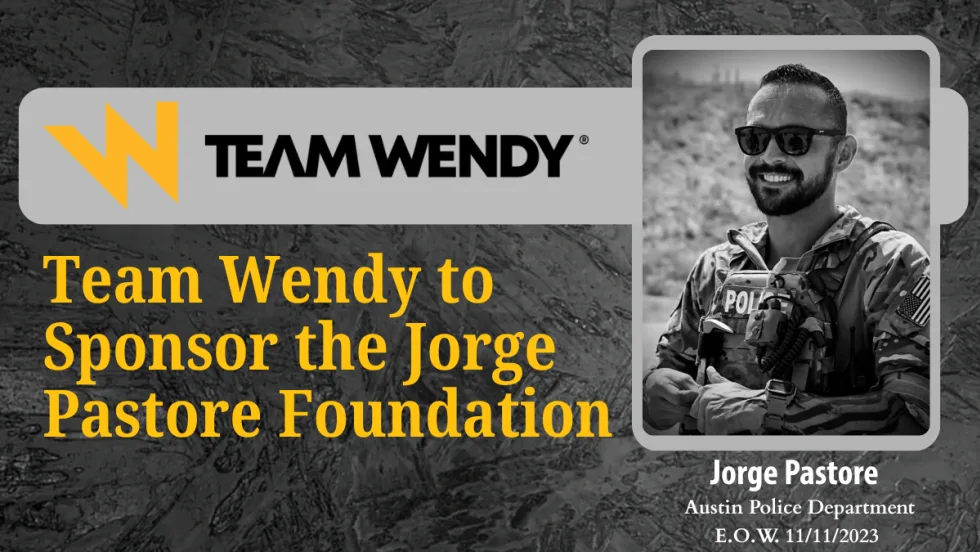
Team Wendy Announces Title Sponsorship of the Jorge Pastore Foundation
Team Wendy’s 3-year partnership with the Jorge Pastore Foundation expands access to programs that strengthen those who serve.
Read More →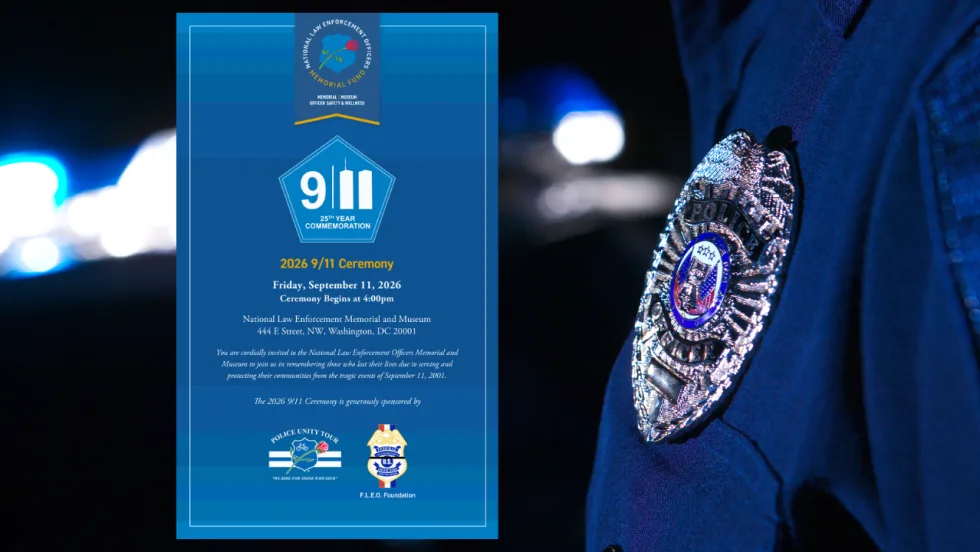
National Law Enforcement Memorial and Museum Hosting 9/11 25th-Year Commemoration Ceremony
The National Law Enforcement Memorial and Museum is hosting a 9/11 25th Year Commemoration Ceremony on Sept. 11 at 4 p.m.
Read More →
National Law Enforcement Officers Memorial Fund Announces June 2026 Officers of the Month
The National Law Enforcement Officers Memorial Fund (NLEOMF) named 15 officers of the Chico Police Department (California) as the Officers of the Month for June 2026 for their roles in responding to an active-shooter incident at a public library.
Read More →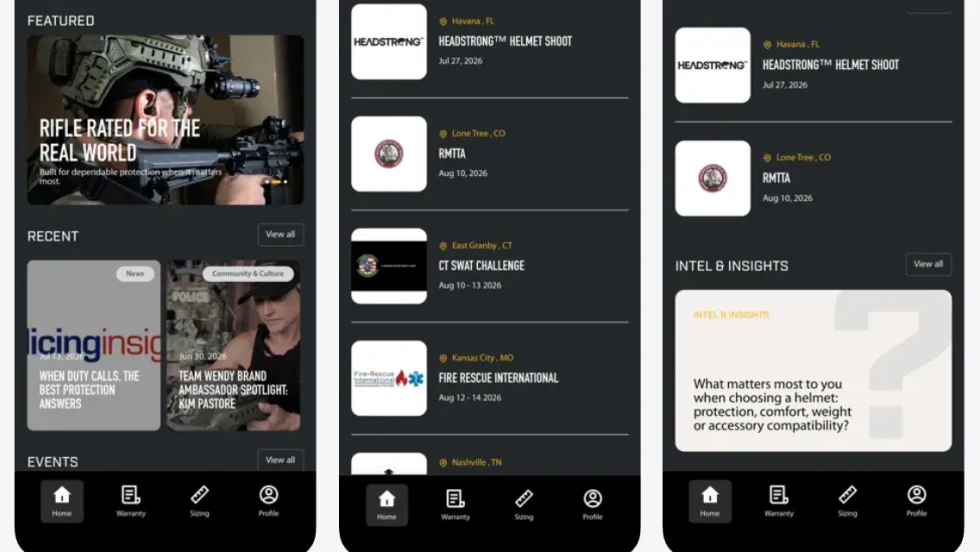
Team Wendy App Creates New Digital Hub for Helmet Owners
The Team Wendy Community App provides one location for warranty registration, size-fit tools, product updates, and community connection. For helmet owners, the new app creates a simpler path to the information and tools that matter most.
Read More →