
First Impressions
Ruger's Ken Jorgensen kindly provided me with an LCR to evaluate for POLICE. When you first handle an LCR, you are immediately aware of three things: its light weight, its excellent ergonomics, and what can only be described as one of the best double-action triggers I have ever felt on an out-of-the-box revolver.
As fellow writer, gunsmith, and firearms trainer Pat Sweeney told me at the SHOT Show, "The LCR has a trigger you would have to pay a gunsmith big bucks to get on any other revolver."
The trigger pull on my test gun was smooth, stage free, and, according to my gunsmith's trigger pull scale, broke at 10.25 pounds. But to me the trigger pull felt considerably lighter than 10 pounds.
Shooting the LCR
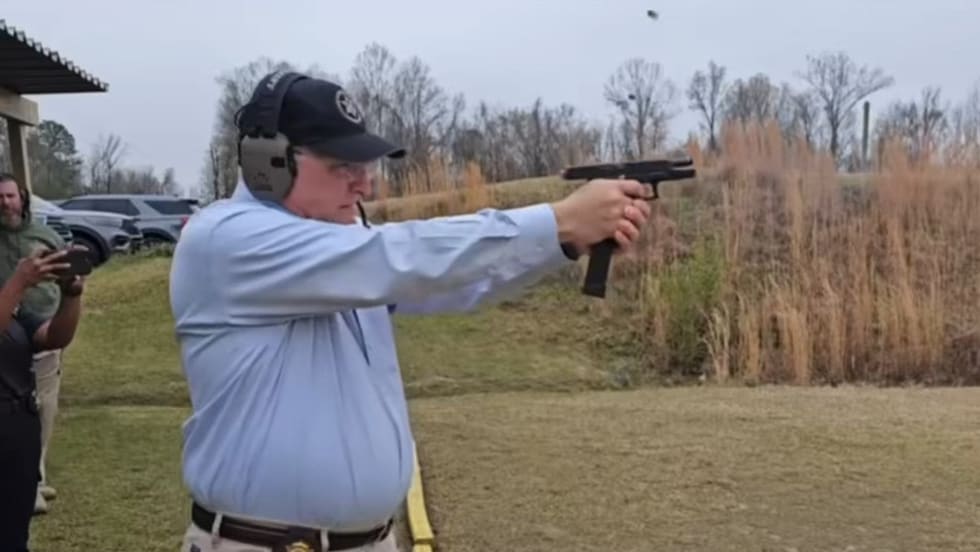
At my first opportunity I took the LCR out to the range and ran it through its paces. While I see little sense in trying to shoot tiny groups from a rest with this type of handgun, many readers find it informative so I fired a number of groups with three brands of .38 Special ammunition.
After chronographing the three brands of ammunition, I proceeded to run a series of offhand drills on a D-1 target set out at seven yards.
Thanks to its polymer construction and the Hogue grips, felt recoil was less than I had imagined and fast, accurate follow-up shots were easy to perform. Much to my surprise considering how light the Ruger is and thanks in no little part to its excellent trigger pull, every round I sent down range ended up in the X and 10 rings of the target.
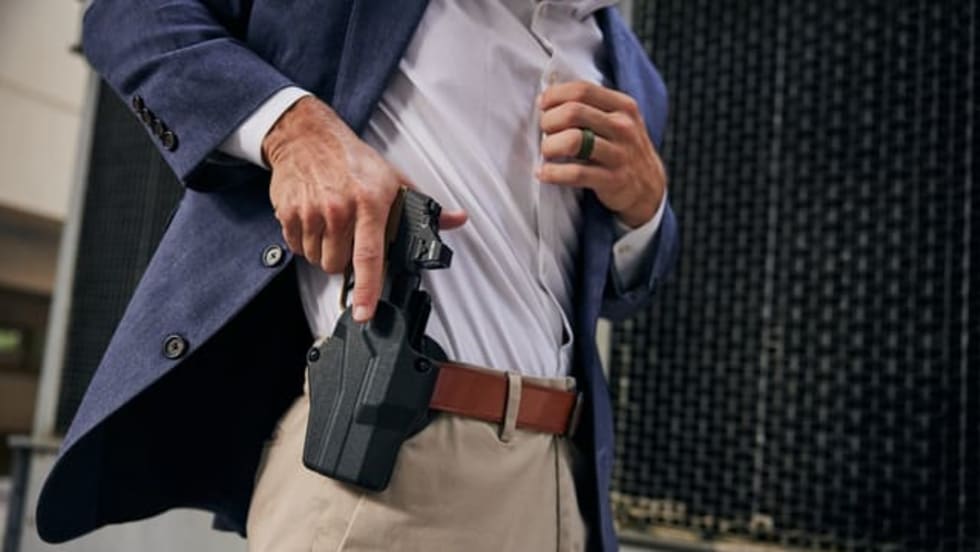
I carried the LCR in a Gould & Goodrich ankle holster for several weeks and, thanks to its small size and light weight, was rarely aware that I had a handgun on me.
If you or your agency are looking for a lightweight, easily concealable handgun for undercover officers or as a backup or off-duty handgun, I believe that you will find the LCR a most viable choice.
Paul Scarlata has served as an auxiliary police officer and is a frequent contributor to POLICE.
For more information visit Ruger online.