
Newest Model
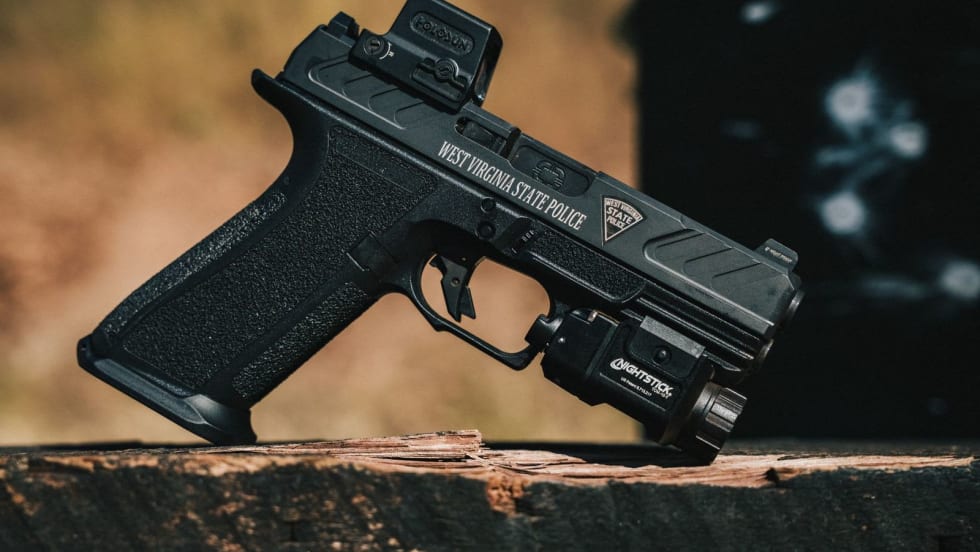
Kahr introduced its first polymer frame pistol, the P9, in 2000. Nine years later, its line of plastic framed pistols has proven so popular that it now comprises a wide variety of duty and concealable handguns. The newest fighting pistol in the Kahr line is CW45, chambered for…what else?…the .45 ACP.
While it looks very similar to the earlier P45, the CW45 is intended as an economy model and so, as to keep within cost guidelines, the exterior of the slide features less machining, resulting in a slightly slab sided appearance. The front sight is pinned in place rather than using a dovetail cut as on the more expensive P-series, while slide markings are engraved rather than roll marked.
The polymer grip frame is checkered and textured to provide a non-slip purchase, while the slide stop is produced by the metal-injection-molding process rather than from a machined part. Instead of the polygonal rifling used on P-series pistols, the CW45's barrel uses cut rifling. Lastly, the CW45 comes with a single, six-round magazine.
While none of these changes decreases the pistol's ability to perform, when combined they lower the retail price considerably, money that could be spent on accessories and practice ammo.
15 Yards
One of the most attractive features of Kahr pistols is that every model operates in the same exact manner: Their controls are in the same locations and the DAO trigger pulls are the same. Once you know how to operate one Kahr, you know how to handle every single model.
The CW45's ergonomics were beyond reproach and when I lifted it to eye level it was pointing where I was looking. I also believe that the Kahr's white dot (front) and bar (rear) system allows the quickest sight alignment of any style. While the six-round magazine was a bit difficult to load to capacity, it fell free when the catch was pressed: empty or loaded; slide forward or locked back.
As the Kahr was designed as a close range defensive pistol, my friend Butch Simpson and I tested it for accuracy at 15 yards from an MTM Predator rest. While it showed a preference for Speer's Gold Dot loads, every projectile that left the muzzle went where we wanted it to, producing groups from 1.65 inches to 2.4 inches.
Butch and I then proceeded with the more serious (and enjoyable) part of the handgun testing. Using a Galco Yaqui Belt Slide holster and dual mag pouch, we took turns putting the CW45 through the following drills:
1. Three yards—draw pistol and fire three rounds on each target with an unsupported (one handed) grip. Perform a combat reload and repeat.
2. Seven yards—draw pistol and double tap each target with a supported grip. Re-holster and repeat three times.
3. Ten yards—draw pistol and fire six rounds, slow aimed fire, on target one. Reload and repeat on target two.
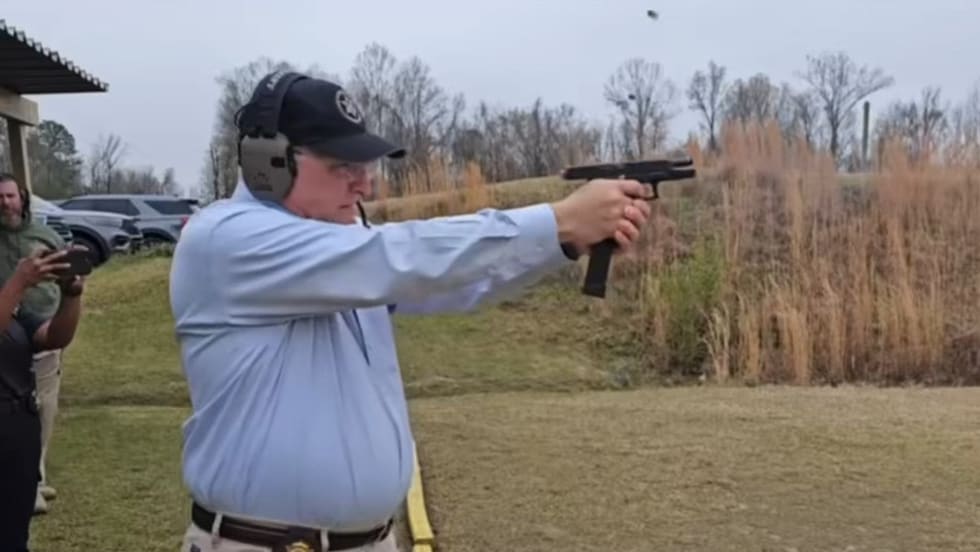
Despite the fact that it was firing large, heavy bullets—some at impressive velocities—the CW45 handled very well. Felt recoil was stiff, but the pistol was controllable and we were able to make fast, accurate follow-up shots.
Both the slide stop and magazine release could be manipulated without moving the pistol around in your hand, and the beveled magazine well allowed smooth, fumble-free reloads. These exertions provided us with a pair of targets with every round except three inside the confines of their respective 10 and nine rings.
I believe the CW45 would make a practical choice for anyone who desires a lightweight, easily concealable, fine shooting pistol chambered for the .45 ACP. Whether you are a law enforcement officer or an armed professional, I believe that the CW45 is capable of doing whatever you want or need a pistol to do. Best of all, in these economic times, it will save you some money in the bargain.
Paul Scarlata has served as an auxiliary police officer. He is a widely published North Carolina-based gun writer and a frequent contributor to POLICE Magazine.