

Photo: iStockphoto.com.
 |
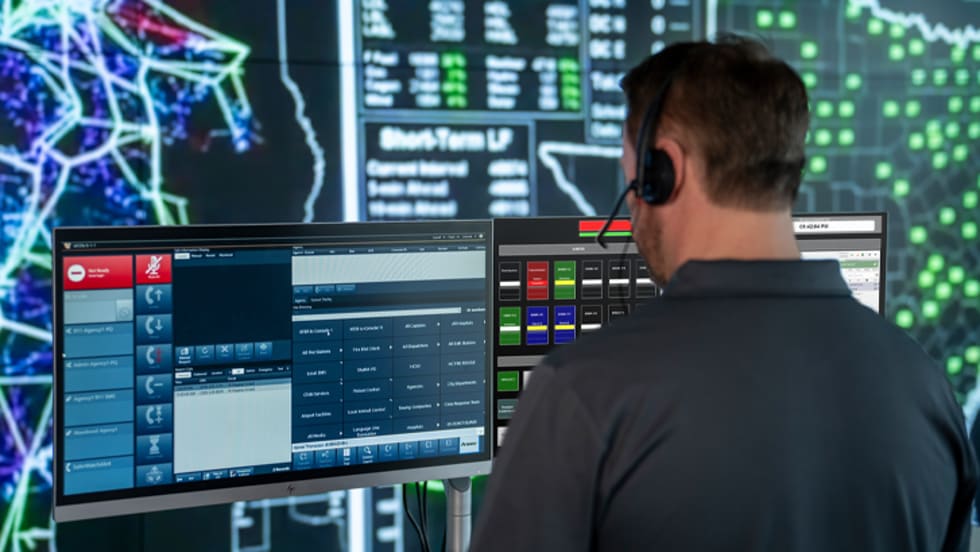
The platitude "every cloud has a silver lining" suggests that good can come from even the worst situations. The attack on the Twin Towers and the Hurricane Katrina disaster brought to the forefront the necessity of communications interoperability, or more simply put, being able to talk to each other. Benton County, Wash., has something very close to a model of interoperability in the form of its Southeast Communications Center, known locally as SECOMM.
Most of the world thinks of Washington as a gloomy, squishy place because of the rainforest conditions on the more populated western side of the state that includes Seattle and Tacoma. That isn't the case for the relatively arid two-thirds of the state east of the Cascade Mountains that receives 300 days of sunshine each year. Benton County lies on the southern border of this part of the state at the confluence of the Columbia, Yakima, and Snake Rivers. Surrounded by farmland, the population center of Benton County is the "Tri-Cities" of Kennewick, Richland, and Pasco. The first two cities are in Benton County; Pasco is across the river in Franklin County. About 250,000 people live in the Tri-Cities environs.
If you don't pay close attention, you won't notice when you move between cities or into an unincorporated area of the county, which means that public safety incidents frequently overlap jurisdictions. Communications for most police, fire, and public works operations in Benton County are handled through SECOMM, which is part of Benton County Emergency Services (BCES). BCES operates from its own building in Richland, tucked behind a Walmart and a Home Depot and unnoticed by most residents. They've been there since 1997, when they moved from their previous home in the basement of Kennewick City Hall.
SECOMM came into being in 1977, when Benton City, Kennewick, and Richland decided to merge their individual dispatch centers into a single operation. At the time, Benton City had its own police department, but it was eventually dissolved in favor of the Benton County Sheriff's Office furnishing police services. The police department of the City of West Richland is also served by SECOMM, as are the fire departments of Richland and Kennewick, three districts of the county fire department, and the Benton County Sheriff's Office. Emergency medical services are provided by the fire departments serving each community.
Agriculture, including the largest wine industry in the United States outside of California, plays a significant role in Benton County's economy, but principal industry is with the activities at the Hanford Site northwest of Richland. From 1944 to 1987, Hanford produced most of the plutonium used in U.S. nuclear weapons. Today, the 586 square miles of the site are controlled by the U.S. Department of Energy, which oversees the cleanup of the decommissioned nuclear reactors and radioactive waste storage there.
Hanford is also home to a working nuclear power plant run by Energy Northwest. The recession hasn't had the impact experienced by most of the country, as work proceeds at Hanford without interruption. The cleanup job is so massive that some people who will retire from "remediation" of the site have not yet been born.
Many people would be horrified at the thought of living so close to so much dangerous material, but local residents aren't put off by Hanford or the Umatilla Chemical Weapons Depot, located just south of Benton County across the river in Oregon. This U.S. Army installation is about to close after decades of disposal of mustard and nerve agent munitions stored in reinforced concrete "igloos" in the Oregon desert.