Photo: Zuma Press.
PHOTOS: View our gallery, "Plate Hunters," for additional images of real-world plates.
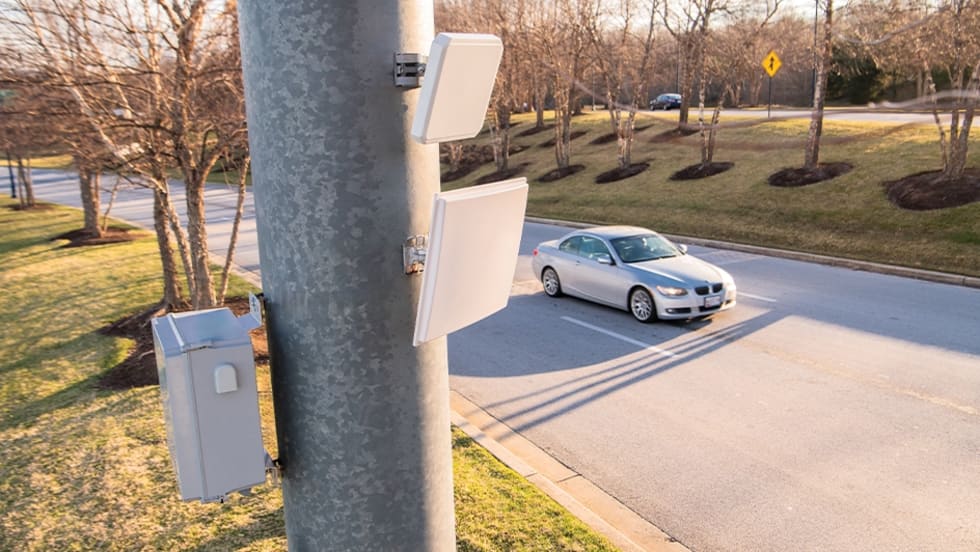
Automated License Plate Recognition (ALPR) technology has been the "oh, wow" gadget for the past few years, and with good reason. ALPR can identify, screen, and record the license plates of more vehicles than an entire squad of police officers could handle, and can do it with greater accuracy and no fatigue factor.
Since the last time POLICE reported on ALPR, there haven't been any major changes in the technology. What has happened is more in the area of refinement and ease of use. At first examination, it's easy to dismiss changes like this as inconsequential. But I see them in the same way I saw the introduction of electrically powered windows on patrol cars. The windows opened and closed the same way, but life got a lot easier when I didn't have to reach over to the other side of the car to do it.
Throughput
The current generation of ALPR handles much more information at one time than did previous versions. Early ALPR installations read and recognized license plates in much the same way a human would, although the throughput was higher. The system would "see" a plate, resolve the number through optical character recognition, then compare the result to a "hot list" of license plates loaded into memory. When that task was complete, the process would start looking for a new plate to read.
More powerful dual and quad-core microprocessors with multithreading capabilities now make it possible for the system to function as if there were several ALPR modules working alongside one another, reading multiple lanes of license plates simultaneously. This increase in speed and efficiency will only get better as new hardware comes online to handle the faster processing of data.
Affinity Plates
Processing speed is more important than ever before, because states seem to be trying to stymie ALPR systems with new license plate designs. Public demand coupled with the allure of new revenue sources has increased the number of "affinity" license plates available to vehicle owners.
Affinity plates are those issued to members of volunteer fire departments, military veterans, contributors to special conservation funds, or to show support for any number of other causes or groups. Some states have hundreds of types of affinity plates, since it takes as few as 25 subscribers to convince the motor vehicle department to issue the special series.
There is very little consistency to the way these license plates are enumerated and coded in each state's vehicle registration files. For example, say that two states decide to issue plates commemorating service in the U.S. Army. State A starts the license plate sequence with 0001 and enters the registration information in its database as registration type AV, for "Army Vet." State B also starts its affinity plate sequence with 0001, but prefixes the number with "AV," placing those two letters to the left of the numbers with the letters stacked vertically. In the state's vehicle registration database, that plate is listed as "AV0001" with the registration type as "PC" if it's on a passenger car and "PU" if it's on a pickup truck.
In both cases, the leading "AV" characters are the only clue that the license plate won't look like the standard plates issued by that state, since most affinity plates also carry special colors, lettering, or the logo or crest of the commemorative target. The ALPR recognition engine has to determine if that emblem is a readable character, or something to be ignored.
Printed Plates
Another way that states are reducing costs is by distributing affinity license plates that are printed, rather than stamped or embossed. These are much cheaper to produce, but they aren't as durable, aren't as reflective, and they're easier to counterfeit. For several years, Oregon has been distributing a Crater Lake affinity plate that is printed, rather than stamped. To say these are unpopular with law enforcement is an understatement. One Oregon trooper said, "They're killing us with those things."