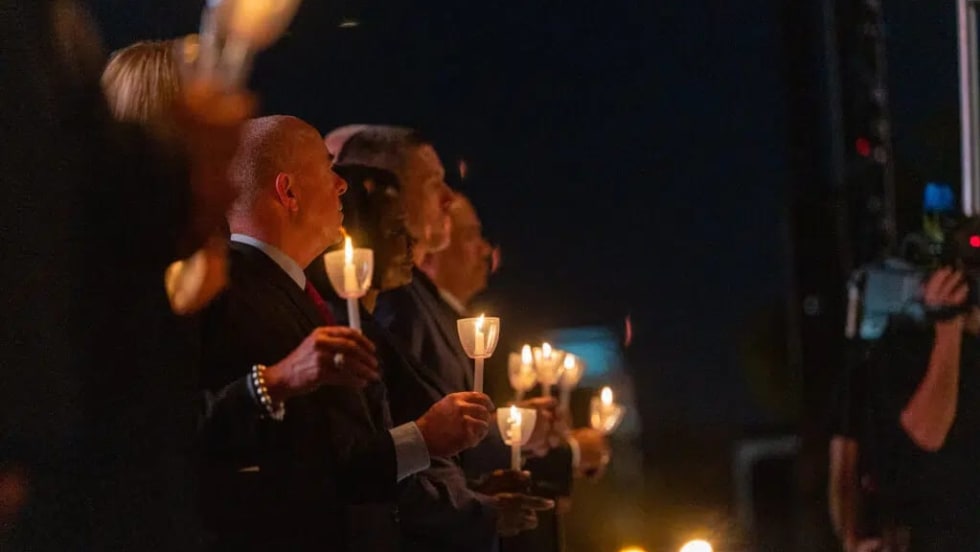

Photo: Seattle PD.
 |
Kelly glanced back toward the hedge. He could now see Clemmons' head down on the ground, extending just from behind where his body was hidden behind the bushes. The man's eyes were as fixed on Kelly as Kelly's were on Clemmons, and it became obvious that his initial rounds had struck Clemmons and done some damage: Clemmons was having an extremely difficult time breathing.
As it was obvious that the man was in no position to comply with any orders even if he wanted to, Kelly didn't bother to give Clemmons any commands but remained at the unit, covering the downed suspect with the shotgun until units arrived.
Officers started arriving; they formed a contact team. Someone grabbed a ballistic shield from one of the sergeant's vehicles. They moved up behind the shield while Kelly held cover with his shotgun. They put handcuffs on Clemmons, grabbed the gun that was in the pocket of his hooded sweatshirt, and moved him into the street.
The precautions were not necessary. Maurice Clemmons was dead.
Split Seconds
Clemmons' intentions that night are subject to all manner of speculation, but Kelly has arrived at certain personal conclusions as to the man's desire to access the Acura.
"He wanted that car," Kelly states. "That was his ride home. He had no idea that it was stolen, or if it was stolen it had been reported so quickly. I think he believed that he could BS his way through a contact with me, or at least get me off guard to the point where he could distract me with other things and then pull out the gun and try to kill me. That is just my gut feeling."
Kelly cannot emphasize enough how important the intel shared with the troops during the shift briefing proved for him. Of particular import were the photos of Clemmons and his mole.
"It was a prominent, distinctive mole," Kelly says. "Without that, it would have taken me at least a second or two longer to figure out who he was. With the whole thing lasting only four to five seconds, that was time that I didn't really have. When I started to pull the trigger, there was no doubt in my mind who I was shooting."
There was a conspicuous difference in the two men's mindsets when it came to split-second adaptation, too.
"When he saw that I was on to him and his plan wasn't going to work, he had a couple of bad moments when he had to reevaluate. He couldn't adjust quickly enough. It was like an Old West shootout with two guys standing in the middle of the street and they go for their guns at the same time. At the same time, we both realized that the other guy means business. I just reacted quicker."
Kelly's training and experience paid off repeatedly throughout the incident, particularly in personal discipline when it came to the prospect of a one-on-one foot pursuit of Clemmons.
"I had no thought of chasing after Clemmons by myself because I had no idea where he was on the other side of the hedge. In our training, they drilled into us that we don't go off chasing a suspect by ourselves and launching into all these unknowns because you're just setting yourself up for just about anything. I continued to maintain a position of cover and made sure I was protected as best I could should Clemmons come back."
Fortunately for Kelly, his 180-grain Spear Gold Dot ammunition was very effective, even though he wasn't sure that he had hit Clemmons at the time.
"I shot seven shots. I struck him four times. There's no way to determine in what order the rounds struck. It's my belief that my initial three rounds were all lethal hits. One round took out his right lung. One round took out his left lung. A third round was a through and through gut shot, perforating organs. There was a through and through to his right thigh, which I'm pretty confident was one of the rounds shot while he was running away from me. Then I had three rounds that didn't strike him. Because of the darkness and how quickly he was moving further away from me, it's likely that the last couple of rounds had the least likelihood of striking him."
Kelly observes that Clemmons' choice of attire may have played a role in the fates of both men.
"The gun had caught up on the zipper of his sweatshirt, which may have been another factor that gave me the advantage of time and may have saved my life."
For 36 hours after the shooting, Kelly obsessed over why the suspect didn't have his gun out prior to the confrontation and how the situation might have been resolved differently if he had. Kelly finally concluded that he would never find that answer, so there would be no use in rehashing that thought over and over again.
"Seattle Detective Russell Weklych of the Homicide/Assault Unit, who investigated the shooting, said that Kelly did an excellent job throughout the incident and its aftermath, especially given the working climate that had descended upon the vicinity over the preceding month."
The Seattle Police Department aided Kelly in his ability to cope with the situation. They gave him as much time as he needed to deal with the aftermath. Once he was ready to return to work, they provided several options to help him transition smoothly back into the job.
Kelly also credits his friendship with fellow officer Britt Sweeney with his ability to move forward after the shooting. Sweeney, just a month before the Lakewood shooting, had been a victim of a similar ambush that killed her training officer.
"I can't say enough about the support she gave to me. It was very nice to have someone that I could speak freely with," he says.
Kelly received numerous awards for his actions against Clemmons, including the National Law Enforcement Officers Memorial Fund's Officer of the Month, the Seattle Police Officers Guild's Officer of the Year, the Seattle Police Department's Medal of Honor, and the Washington State Officer of the Month.
Related:
Face to Face with the Lakewood Cop Killer
Seattle Police Officer Ben Kelly Named NLEOMF Officer of the Month
Seattle Officer Describes Shooting of Lakewood Police Killer Clemmons