
Using Strobes on the Street
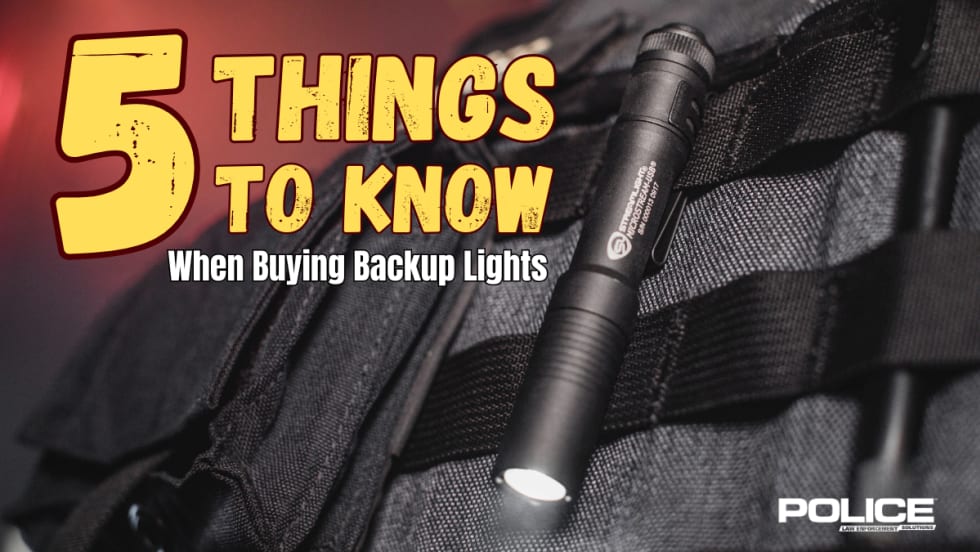
Before we discuss any strobe light application methods, let's discuss what I believe to be one of the biggest hurdles faced by my students as they attempt to learn strobe light techniques. The method of accessing the strobe feature continues to be an issue with many light designs. This issue deserves to be discussed in this forum as the switching method needs to be at the top of your list as you evaluate a light for purchase.
Each manufacturer has its own method of switching between strobe, constant/momentary on, and various intensity outputs. I have to say that I am not crazy about any particular switch design currently available. I also realize after working with one manufacturer for more than three years on this issue that there is no simple solution.
Ideally the operator should have the ability to switch from constant or momentary on to strobe without any fine motor skills necessary. The switching between light functions should be effortless, without gimmick, and certain even under stress when a lack of tactile function is to be expected.
In addition, gloves are often worn during many of these critical situations. Before buying a strobing light, ask yourself how well the switching method will work while wearing gloves. Do not limit your evaluation of strobe lights to lumen output, brightness, or brand. Be sure to experiment with the various switching solutions offered and anticipate their effectiveness under stress-related conditions.
Operating in a low-light environment requires many elements and skills to be successful and maintain a position of tactical advantage. There is not enough room in this article to discuss low-light tactics in their entirety. I will, however, discuss strobe light considerations as they relate to control.
Suspect control is one of the most important aspects of low-light applications but also the most underused and misunderstood concept. Let's think of the many advantages you realize by applying light as a control tool.
With the light in his eyes, the suspect is preoccupied and uncomfortable and will not be able to direct an effective threat your way. He will not be able to look for escape paths, and he will have a very difficult time determining how many of you he is faced with. His discomfort, disorientation, and inability to see clearly in your direction all result in a situation that will be much easier for you to control. The chances are much greater that he will become compliant rather than raise the level of his resistance.
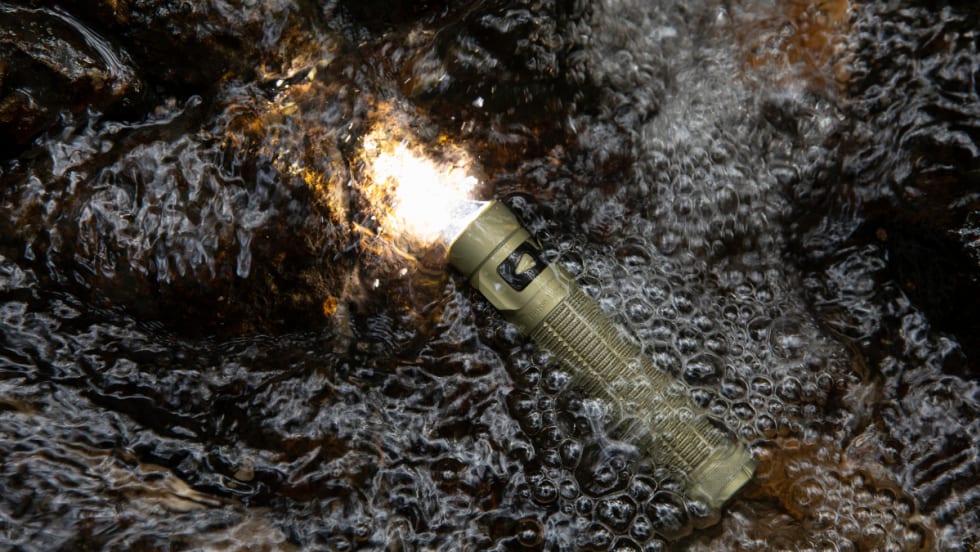
I am not talking about a major change in your tactics. All I am asking you to do is to make a small adjustment in the application of your light/firearm deployment skills. Place the hotspot of the light in the suspect's eyes. (See photo on page 33). There will be enough peripheral light to see the hands even if they are left down by his side. More than likely, the hands will be brought to his face in an effort to shield away the light. If a cover officer is available, a constant-on light should be deployed in addition to the strobe so you can maintain the best visibility of the suspect.
These are but a few of the considerations surrounding strobe light operation in law enforcement. Do I use one? You bet.
When used appropriately a strobe light can be a very powerful tool in your tactical tool box. As with any tool, its effectiveness depends on our ability to understand its limitations, benefits, and overall function.
There is no replacement for practice and skill refinement. The basis for any deployment system or technique is manipulation skills and ultimately the further refinement of those skill sets should be your goal. If you choose to add a strobe-capable light to your arsenal, become familiar with its operational controls and know when to use it.
STROBING FLASHLIGHTS AND WEAPON LIGHTS
Almost every major police flashlight or weapons light manufacturer is now offering lights that feature strobing. Here's a quick look at some of the more popular makes and models and how the strobe is triggered for each.
5.11 Tactical Light for Life Series
Law enforcement gear, apparel, and footwear manufacturer 5.11 entered the flashlight market a couple of years ago with the full-size (11.5 inches long) Light for Life UC3.400. The company now also makes a mid-size model, the 8.75-inch PC3.300. Both flashlights recharge in 90 seconds thanks to capacitor technology and both offer strobe features. The full-size light sports a 270-lumen strobe that is triggered by two clicks of the "on" button. To activate the 200-lumen strobe on the mid-size model, you push and hold the "on" button.
Visit 5.11 Tactical Online
BlackHawk Night-Ops Line
BlackHawk's Night-Ops line of tactical illumination tools includes the Gladius Maximis flashlight and the Xiphos NT weapons light. Both have strobe features and both are named for swords carried by ancient soldiers. The Gladius Maximis is a 6.23-inch flashlight with a maximum output of 120 lumens and a runtime of 90 minutes. To activate the strobe, the operator turns the tail ring and pushes the tail switch. The Xiphos NT is a 3-volt, rail-mounted pistol light with 90 lumens of output. Its strobe feature is activated by tapping the "on" lever twice.
Visit BlackHawk Online
Brite-Strike Blue Dot 198
Designed by police officers for police officers, Brite-Strike's Blue Dot 198 line offers several models with strobe features. The lights take their name from their maximum output of 198 lumens, and they are available with a variety of different functions. The functions are activated via an end cap switch. To turn on the strobe, the operator cycles through high, low, and strobe modes by pushing the end cap button.
Visit Brite-Strike Online
Inova T-4 and T-5
Recently acquired by Nite Ize Corp., Inova is best known for its keychain lights, but the company makes some excellent duty lights. The T4 is a rechargeable model with an output of 200 lumens. A mid-body switch activates high, low, momentary, and strobe modes. The T5 is a nine-inch-long lithium battery-powered flashlight with a maximum output of 200 lumens. It also has a four-mode mid-body switch.
Visit Inova Online
Insight Tech-Gear Arcturus Line
Insight's 150-lumen Arcturus lights come in two versions: a rechargeable and a lithium battery-operated model. The light's functions are activated by pressing the tail cap. Two quick clicks triggers the strobe.
Visit Insight Tech-Gear Online
Streamlight Weapon Lights
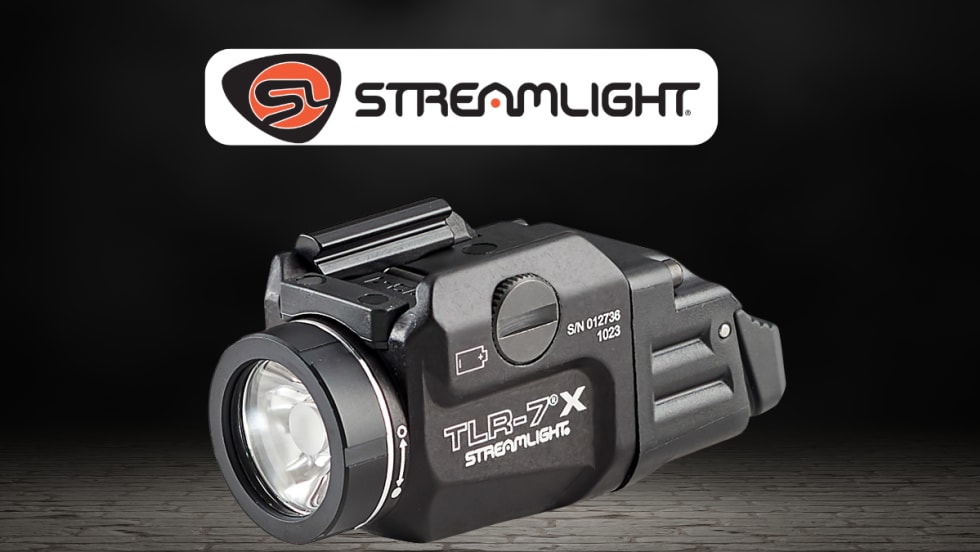
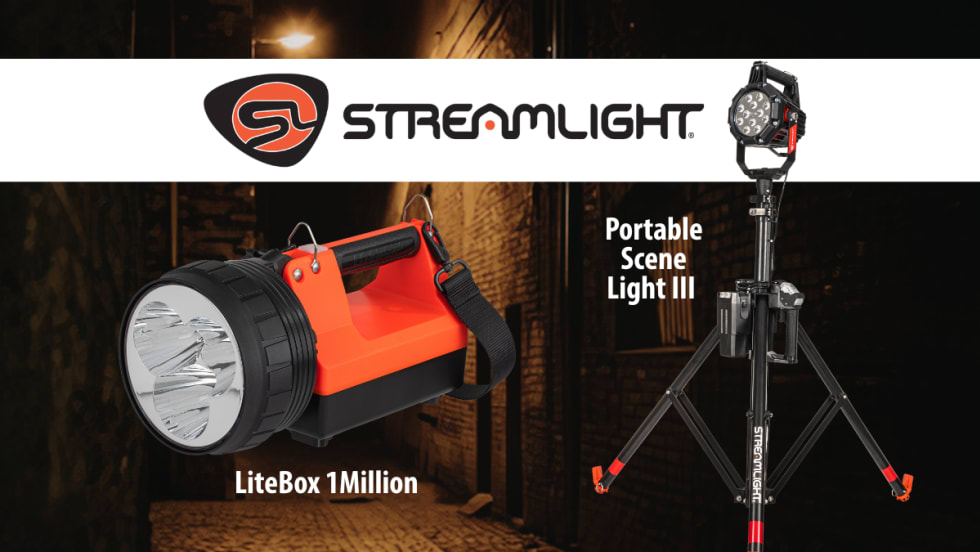
Featuring C4 LED technology, Streamlight's TLR-1 and TLR-2 (with laser sight) now offer strobe mode. Both lights have a maximum output of 160 lumens. The strobe is activated by clicking the paddle switch twice and then holding it down. Like prior versions of the TLR-1 and TLR-2, the lights are machined out of aircraft aluminum with black anodized finish. Both weigh less than five ounces.
Visit Streamlight Online
SureFire Z2-S LED CombatLight
Compact and powerful, SureFire's five-inch-long Z2-S LED CombatLight is a rugged duty light with a 160-lumen maximum output. The CR-123A battery-powered flashlight has a runtime of two hours. And its beam is not only powerful but also very smooth thanks to its precision micro-textured reflector. Strobing is activated by three rapid clicks of the tail cap.
Visit SureFire Online
Ed Santos is the author of "Rule the Night Win the Fight: a Practical Guide to Low-Light Gun Fighting." He has been teaching firearms and tactics for more than 25 years and has studied low-light operations for more than 20 years. Santos is a retired Army officer and a reserve deputy in northern Idaho.