
It is said that if you know your enemies and know yourself, you will not be imperiled in a hundred battles; if you do not know your enemies but do know yourself, you will win one and lose one; if you do not know your enemies nor yourself, you will be imperiled in every single battle. - Sun Tzu, "The Art of War"
Long ago I chose to be a sheepdog (a warrior), and not just another sheep (a member of the public). I have survived numerous encounters with human wolves, read "criminals," and other predators while protecting the flock.
You also have chosen to protect and serve the flock. Th is is a very just and noble calling, but just because you are one of the "good guys" does not mean that you will prevail against the "bad guys."
Based on my long years in this occupation, my best advice for you is: Never underestimate the bad guy's cunning, skills, abilities and potential for violence, especially when dealing with gang members.
Your mind is your primary defensive weapon. Your brain must be 100-percent "in this game" at all times. Preoccupation with your problems at home, fatigue, and sleep deprivation will put you at a huge combat disadvantage.
The late Col. Jeff Cooper used to describe the states of mental preparedness for combat by using the colors of a traffic signal light: green, amber, and red. Th e color green represents a relaxed state, unprepared to react quickly to go to red, combat mode. Green is the color most sheep (people) live in. As a sheepdog you must never let your mind slip back to green. You must forever live your life in the amber color. In this amber state your mind might be relaxed, but it is prepared to quickly move to the combat red mode.
Nonverbal Indicators
On duty or off duty, think tactically. Be aware of your surroundings and the people around you. And always be on the lookout for signs of predatory conduct.
Predatory gang members often move in a stalking prowl-like manner. They don't just move from point A to point B.
Even when they are driving, they exhibit hunting or predatory movement. For example, their vehicles will slowly lean into the lane, drifting toward the sidewalk slightly, in anticipation as the driver approaches possible victims.
One sunny California morning my partner Dep. Steve Polak and I were working in Compton monitoring an elaborate Crip funeral. Dozens of blue rags flew from the antennas of big dark low-rider sedans as they snaked through the streets on their way to the cemetery. Tension was high because gang retaliations by either side were common even during a funeral, and there was no love for the police and sheriff 's deputies who rode herd on these funeral possessions.
One vehicle purposely lagged behind the long procession and exhibited the slow predatory hunting movement that I described earlier. We made the decision to initiate a traffi c stop on this suspicious black Cadillac.
After observing a couple of minor traffic violations, I closed on the vehicle and activated the light bar to make the stop. The Cadillac pulled to the curb, and I approached the driver, who was dressed in a dark, neat, three-piece suit. Two other gang members sat as passengers in the Cadillac. For my safety I had the driver exit the vehicle.
As he stepped out, I began reciting my customary lines to solicit a pat down search. "You're not carrying any knives, guns, or bombs are you?" I said, preparing to follow with,"...then you don't mind if I pat you down for weapons for my own safety?" But before I could get the second line out of my mouth, I noticed that the well-dressed gang member's eyes widened suddenly, his mouth fell open but no words came out, and his right hand went down to his right front pants pocket.
Not having time to draw my own holstered weapon, I simultaneously yelled "Gun!" and spun him around to reach his pistol before he did. Covered by my partner, I pulled a loaded .38 revolver out of the well-dressed Crip's pocket.
That Crip unintentionally communicated to me that he had a gun in his pocket, as surely as if he spoke it. And that's not unusual.
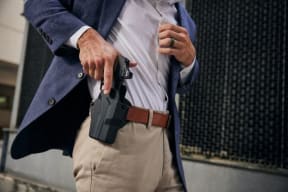
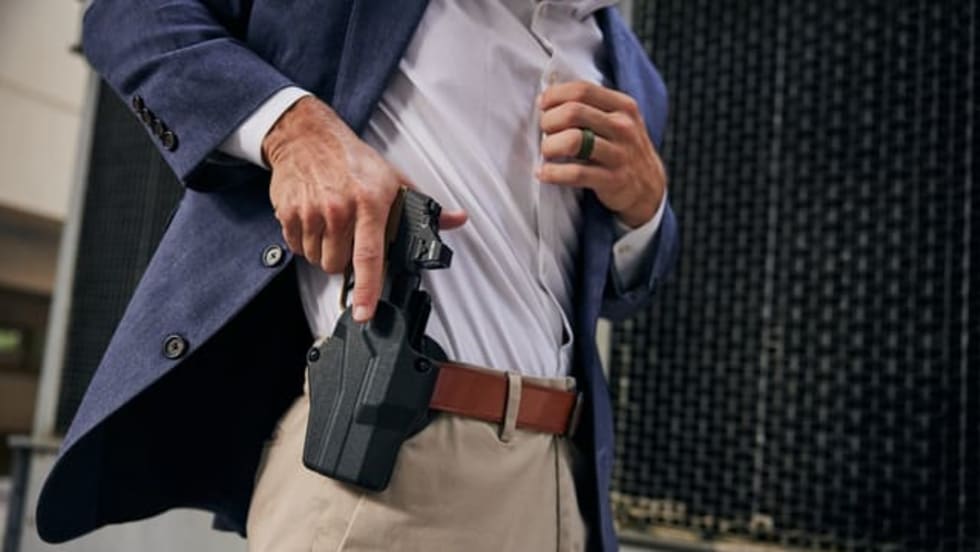
Gang members often give non-verbal indicators that they are armed. Look for unusual clothing and manners of dress to conceal weapons. Big heavy coats in hot weather, dark clothing, and dramatic gangster attire are sometimes used to intimidate.
Also, look for subtle indicators like gang members who move or walk in an unusual way, favoring one side or one leg. Look for unconscious nervous gestures like touching the concealed weapon for reassurance.
In a recent FBI report titled "Violent Encounters: A Study of Felonious Assaults on Our Nation's Law Enforcement Officers," researchers noted that the victim officers often missed basic clues that the suspects were armed. For example, it notes that "Officers should look for unnatural protrusions or bulges in the waist, back, and crotch areas."